Cosmic supermagnet spreads mysterious Morse code Print
20 May 2008

Astronomers from SRON have discovered mysterious pulses that are being emitted by an extremely magnetic star. The magnetic star, a magnetar, emits the pulses as very high energy X-rays. The astronomers made their observations using the ESA space telescopes INTEGRAL and XMM-Newton and the NASA satellite RXTE.

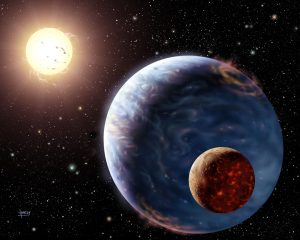
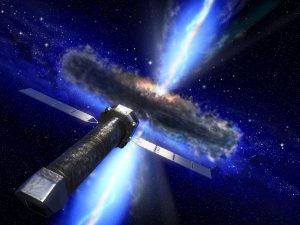
Magnetars zijn de sterkste magneten in het heelal (beeld: ESA)
Sometimes observations confirm a scientific theory perfectly, yet at other times telescopes bring completely new phenomena to light. That is what happened in the case of SRON astronomer Peter den Hartog. ‘I was looking for new sources of high energy X-rays on a celestial chart, made using the space telescope INTEGRAL. To our surprise, at the edge of this chart a star was visible that we knew was a magnetar. However, we never expected that it would emit this type of radiation,' says the researcher, who upon making this discovery immediately requested additional observation time with INTEGRAL for follow-up research.

Lighthouse

Magnetars are small compact neutron stars with a magnetic field that is one billion times stronger than what can be artificially made on Earth. They are the strongest magnets in the universe. They have a mass one-and-a-half times that of the Sun but this is squeezed into a sphere with a radius of 10 kilometres. How they form exactly is a mystery. As they emit enormous quantities of energy in the form of X-rays, they have a lifespan of only 10,000 years. The magnetars rotate like mad around their axes, as a result of which they regularly sling a bundle of radiation into space like a lighthouse emitting a beacon of light. Although these X-rays to not reach the Earth's surface, they are nevertheless visible in space with the aid of an X-ray telescope.

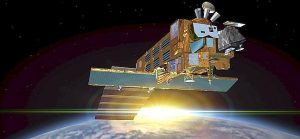
INTEGRAL is sinds oktober 2002 operationeel in de ruimte (beeld: ESA)
For a long time astronomers thought that they had understood the nature of magnetars. The internal energy of a magnetar, stored in the extreme internal magnetic field that spirals through the star, was emitted as relatively low energy X-rays. However, that image was overturned several years ago by SRON astronomer Lucien Kuiper, when he used observations from INTEGRAL to demonstrate that the magnetars emit far more radiation of a far higher energy level. The phenomenon of the magnetars was once again shrouded in mystery. And Peter den Hartog's research has only added to this by revealing even more striking properties.

Film

‘By converting the observations from INTEGRAL, XMM-Newton and RXTE into a type of short film, we could see how the characteristics of the X-rays changed over the course of time,’ explains Den Hartog. The characteristics of the radiation were found to drastically change during the rotation of the magnetar. Den Hartog: ‘Three different processes were found to be taking place in the magnetar that gave rise to three different pulses’. For the time being, the meaning of this Morse code remains a mystery. This is why astronomers look with high expectations forward to the first data of space observatory GLAST due for launch by NASA on the 2nd of June. GLAST will study the high energy radiation from the universe in detail.

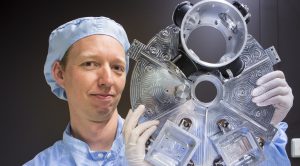
Een Delta II raket wordt gereed gemaakt voor de lancering van GLAST (beeld: NASA)
SRON is strongly involved in both INTEGRAL and XMM-Newton. SRON astronomer Wim Hermsen is a mission scientist in the INTEGRAL team and as such is closely involved in the satellite's scientific programme. SRON has also built an instrument for XMM-Newton that unravels the X-rays picked up by the telescope and then analyses these in detail.

Peter den Hartog defended his PhD thesis entitled ‘Non-thermal X-ray emission from Anomalous X-ray Pulsars’ on Wednesday 21 May 2008 at the Universiteit van Amsterdam.


  • 31-08-2010  
  • Herschel discovers water vapour in atmosphere carbon star
  • 25-06-2010  
  • VLT detects first superstorm on exoplanet
  • 21-06-2010  
  • Extreme gravity effects revealed by oxygen for the first time
  • 21-06-2010  
  • New directorate at space research institute SRON
  • 10-06-2010  
  • Astronomer Marijn Franx wins Spinoza Prize
  • 31-05-2010  
  • Most of the potentially hazardous asteroids not yet known
  • 10-05-2010  
  • Astronomers find recoiling super-massive black hole
  • 06-05-2010  
  • HIFI on the trail of new water in the Universe
  • 29-04-2010  
  • Herschel First Results Media Day
  • 15-04-2010  
  • The Netherlands and Japan decide on cooperation in space science
  • 02-04-2010  
  • Stars mesmerize visitors of Star Weekend at NEMO
  • 04-03-2010  
  • Herschel-HIFI unveils precursors of life-enabling molecules in Orion Nebula
  • 19-02-2010  
  • International Conference: ten years of X-ray astronomy using Dutch gratings
  • 16-02-2010  
  • New insight in ozone chemistry above North Pole
  • 14-01-2010  
  • HIFI resumes quest for water in Universe
  • 14-01-2010  
  • Higher temperatures also a cause of climate change
  • 07-01-2010  
  • Three-antenna linkup milestone for ALMA
  • 23-12-2009  
  • Back-up system HIFI passes first tests
  • 21-12-2009  
  • Utrecht University and SRON strengthen cooperation in space science
  • 10-12-2009  
  • 10 years XMM-Newton: a new view of the universe
  • 07-12-2009  
  • Distance to black hole no longer a secret
  • 01-12-2009  
  • Herschel spectroscopy: update
  • 23-11-2009  
  • Herschel in TIME's top ten
  • 19-11-2009  
  • HIFI back in business early 2010
  • 26-10-2009  
  • Consistent failure scenario for HIFI
  • 02-11-2009  
  • Space capsules in Utrecht
  • 28-10-2009  
  • SRON and JAXA agree on cooperation in space science
  • 26-10-2009  
  • Consistent failure scenario for HIFI
  • 21-10-2009  
  • Many visitors at Open Day SRON
  • 07-10-2009  
  • GOCE ready to measure Earth's gravity field
  • 01-10-2009  
  • Open Day SRON: everything you wanted to know about space research
  • 04-10-2009  
  • HIFI one step closer to switch-on
  • 30-09-2009  
  • SRON: planetary research with spectropolarimetry
  • 04-09-2009  
  • Setback HIFI
  • 10-09-2009  
  • A new look at the atmospheric water cycle: Isotope measurements from space using SCIAMACHY
  • 21-07-2009  
  • Dutch golden X-ray gratings launched 10 years ago
  • 08-07-2009  
  • European grant for astronomers
  • 10-07-2009  
  • Space instrument HIFI delivers crystal clear observations
  • 06-07-2009  
  • The Netherlands and ESA sign agreement for environmental monitoring satellite
  • 06-07-2009  
  • Using Earth-observation to search for new Earths
  • 24-06-2009  
  • Space camera HIFI sends first measurements to earth
  • 02-06-2009  
  • SRON responsible for new ambitious space project
  • 27-05-2009  
  • HIFI passes first tests in space
  • 14-05-2009  
  • Successful launch of space telescope Herschel
  • 13-05-2009  
  • Herschel-special on kids program Klokhuis
  • 11-05-2009  
  • European space telescope with Dutch heart is ready for launch
  • 06-05-2009  
  • Herschel filled up with helium for long space mission
  • 28-04-2009  
  • Launch Herschel 14 May
  • 10-04-2009  
  • Start of 'Search for life'
  • 31-03-2009  
  • Interstellar dust shows its fingerprint
  • 18-03-2009  
  • Look through the eyes of Herschel space telescope on 'Avond van de sterren'
  • 12-03-2009  
  • Sensors in balloon gondola measure ozone depletion
  • 12-03-2009  
  • Space instrument HIFI is ready for launch
  • 11-03-2009  
  • Dutch scientists ready for launch GOCE
  • 12-02-2009  
  • Herschel on its way to launch base
  • 11-02-2009  
  • SRON astronomer Kaastra advisor for Astro-H
  • 30-01-2009  
  • General Director Karel Wakker retires
  • 19-12-2008  
  • Grant for SRON astronomer
  • 15-12-2008  
  • Space instrument HIFI successful through last test on earth
  • 04-12-2008  
  • Freezing tundra a source of greenhouse gas methane
  • 28-11-2008  
  • Compact cool star appears to be surprisingly explosive
  • 26-11-2008  
  • The Netherlands develop new satellite instrument for earth observation
  • 25-11-2008  
  • Soyuz launcher brings Dutch experiment to ISS
  • 24-11-2008  
  • European space ministers meet in The Hague
  • 08-10-2008  
  • Open house Space Research: 19 and 26 October
  • 03-10-2008  
  • Students debate in parliament on space issue
  • 04-09-2008  
  • SRON computers on standby for GOCE
  • 07-07-2008  
  • Dutch investment in mission to Mars
  • 01-07-2008  
  • SRON manager chairs ESA programme board on space exploration
  • 25-06-2008  
  • Sensitive space instrument resists roaring rocket engine
  • 11-06-2008  
  • SRON space researcher obtains high position at European Southern Observatory
  • 20-05-2008  
  • Cosmic supermagnet spreads mysterious Morse code
  • 16-05-2008  
  • Increasing air pollution over Asia observed by SCIAMACHY, an environmental "spy in the sky"
  • 25-04-2008  
  • XMM-Newton discovers part of the missing matter in the Universe
  • 25-04-2008  
  • Space researchers present super sensitive detector
  • 18-03-2008  
  • First meeting of the SRON international Science Advisory Committee
  • 17-03-2008  
  • Space electronics pass Mars test
  • 31-01-2008  
  • Minister Plasterk pays visit to SRON
  • 15-12-2007  
  • Space telescope unveils hidden cosmic giant
  • 20-11-2007  
  • Astronomers observe acidic Milky Way galaxies
  • 16-10-2007  
  • Dutch satellite images of air quality visible in Google Earth
  • 05-10-2007  
  • 21 October: Open house SRON
  • 03-10-2007  
  • New chairman of the board of SRON
  • 24-09-2007  
  • Expositions on history Dutch space science
  • 14-09-2007  
  • Neon sheds new light on planet formation
  • 03-09-2007  
  • Dutch space technology searches for water in the universe
  • 06-08-2007  
  • SRON delivers test facility LISA Pathfinder
  • 10-07-2007  
  • SRON astronomer wins grant for research on neutron stars
  • 25-05-2007  
  • John Heise wins award for popularizing astronomy
  • 16-04-2007  
  • Australia under the smoke of South American wild fires
  • 13-04-2007  
  • Grant for research on cosmic super magnets
  • 20-03-2007  
  • ALMA passed design review
  • 05-02-2007  
  • Universe contains more calcium than assumed
  • 17-01-2007  
  • New nano sensor promising for space research
  • 22-12-2006  
  • The search for new worlds
  • 23-10-2006  
  • Students investigate planet formation in falling plane
  • 13-10-2006  
  • Space research on algae opens new possibilities
  • 27-09-2006  
  • 7 October: symposium 'Water'
  • 20-09-2006  
  • 22 October: Open House SRON
  • 25-08-2006  
  • High international positions for SRON-astronomers
  • 10-08-2006  
  • Look in the center of a white dwarf
  • 14-07-2006  
  • New satellite monitors small dust particles
  • 13-07-2006  
  • SRON researchers awarded by NWO
  • 13-07-2006  
  • ESA selects new satellite mission for air quality and climate
  • 24-05-2006  
  • SRON software produces first image AKARI
  • 15-05-2006  
  • Cleaner and more efficient lamp by space experiment
  • 11-05-2006  
  • XMM-Newton determines the origin of elements
  • 19-04-2006  
  • Kosmische klok blijkt draaitol
  • 16-03-2006  
  • INTEGRAL catches stellar corpses by the tail
  • 14-02-2006  
  • Dutch support Japanese satellite Astro-F
  • 25-01-2006  
  • Mars surface too extreme for extremophile bacteria
  • 18-01-2006  
  • New Dutch plans for measurements on methane in the atmosphere
  • 21-12-2005  
  • Space researchers find building blocks for life near another star
  • 07-12-2005  
  • The Netherlands is heading for Mars
  • 28-11-2005  
  • International committee: “Dutch space research is world-class”
  • 13-10-2005  
  • Open House SRON Space Research
  • 20-09-2005  
  • Space Researchers explain accelerated stars
  • 31-08-2005  
  • SRON-talent awarded
  • 08-06-2005  
  • Micro-antenna searches for space signs
  • 07-06-2005  
  • SRON develops space chip
  • 25-05-2005  
  • PAHs in space (polycyclic aromatic hydrocarbons)
  • 28-04-2005  
  • Raketvlucht voor reumaonderzoek
  • 31-03-2005  
  • Nieuwe koeler voor detectorontwikkeling
  • 21-02-2005  
  • Beter begrip bloedsomloop door astronautenonderzoek
  • 08-02-2005  
  • Klotssatelliet leidt tot betere ruimtevoertuigen
  • 25-01-2005  
  • Zwart gat blaast van zich af
  • 07-01-2005  
  • Eerste resultaat OMI
  • 20-12-2004  
  • Nederland bouwt prototype geavanceerd ruimte-instrument
  • 07-12-2004  
  • Missie DELTA wetenschappelijk en educatief succesvol
  • 15-11-2004  
  • Samenwerkingsverband ruimtevaart vergroot Nederlandse kansen
  • 26-10-2004  
  • Nederland betrokken bij nieuwe zwaartekrachtssatelliet
  • 19-10-2004  
  • Ruimtemoleculen nagebootst in reageerbuis
  • 13-10-2004  
  • Open Dag Ruimteonderzoek
  • 04-10-2004  
  • Noordpoolwinters in model
  • 15-07-2004  
  • OMI-instrument vlekkeloos gelanceerd
  • 14-07-2004  
  • Ruimteonderzoekers bewijzen werking nieuwe waarneemmethode
  • 22-06-2004  
  • OMI-instrument klaar voor lancering
  • 29-04-2004  
  • Sla is bij Kuipers de kluts kwijt
  • 22-04-2004  
  • Seeds in Space van start!!
  • 03-03-2004  
  • Knipperster blijkt kosmische draaitol
  • 25-02-2004  
  • SRON legt basis nieuwe astronomische röntgencamera
  • 20-02-2004  
  • Brede Nederlandse belangstelling voor planeetonderzoek
  • 04-02-2004  
  • Promotie op stoffelijke sterresten
  • 30-01-2004  
  • Seeds in Space naar de scholen
  • 27-01-2004  
  • Toekomst vol uitdagingen voor Nederlands ruimteonderzoek
  • 07-01-2004  
  • NWO-subsidie voor jong SRON-talent
  • 28-11-2003  
  • Afscheidssymposium voor Johan Bleeker
  • 18-11-2003  
  • SRON intensief betrokken bij DELTA-missie
  • 04-11-2003  
  • Uitslag Spacequiz Open dag
  • 19-10-2003  
  • Open dag SRON succesvol
  • 10-10-2003  
  • Open dag Ruimteonderzoek!
  • 26-05-2003  
  • Karel Wakker nieuwe algemeen directeur SRON
  • 16-05-2003  
  • Ruimteonderzoekers schrijven geschiedenis
  • 28-04-2003  
  • Ruimteonderzoekers bespreken explosief heelal
  • 14-01-2003  
  • Promovendus verklaart zeldzame rontgenflitsen
  • 09-01-2003  
  • Nederlands getinte Shuttlevlucht startklaar