


20 years of KIDs

The versatile Kinetic Inductance Detector (KID) promises to unravel many mysteries in the universe. But how did we get to this point? With a development process that itself was full of groundbreaking insights and milestones.

Breakthroughs in solid-state physics. Pioneering work with thermal shielding, and frustrations with breaking crystalline silicon. Exciting ideas and publications with significant consequences. Perfection of manufacturing and euphoria at the first astronomical measurement.
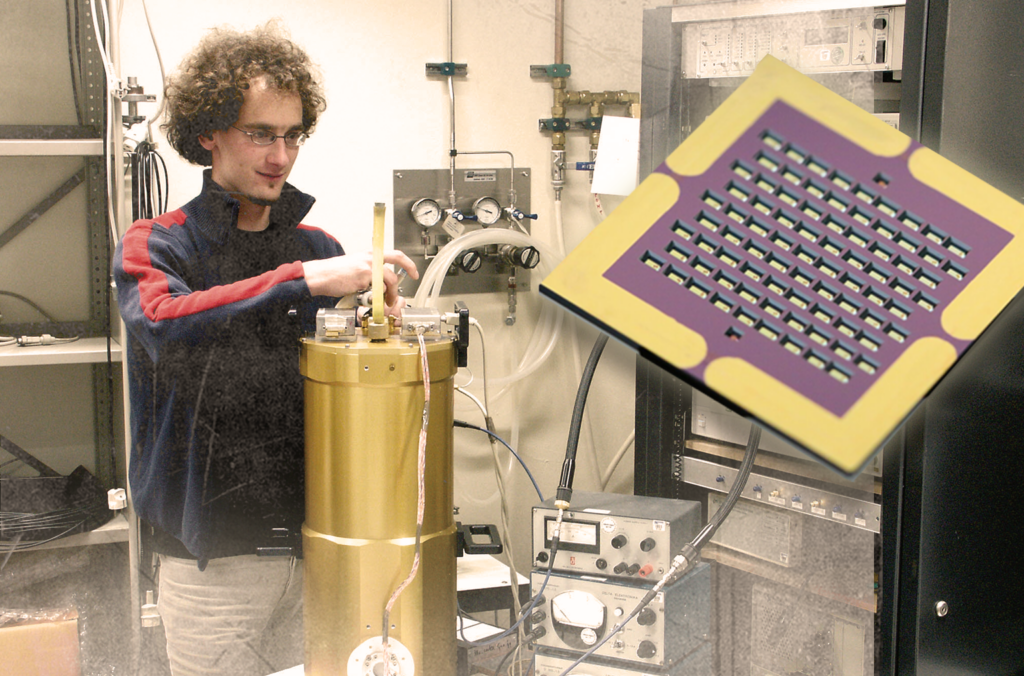
 

KID's SRON

Over the past 20 years, the Kinetic Inductance Detector has been developed in the Netherlands from a microwave detection experiment into broadband measurement technology for regions of the electromagnetic spectrum that are difficult to measure: between optical and far-infrared. KIDs can detect the weakest and oldest imaginable signals from the universe and will be used in future flagship missions. They can produce panoramic images using large arrays and, when used as spectrometers, can also produce very wideband spectra. Take a look at the specifications on SRON.nl. https://www.sron.nl/pijlers/technologie/

Read more

Ariel Consortium Meeting

The 2025 spring Ariel Consortium Meeting will be hosted by SRON Space Research Organisation Netherlands in Leiden, the Netherlands. The meeting will take place from April 9th to 11th. In addition April 8th has been reserved for a technical meeting.

Ariel-Consortium-Meeting

Practical Information

More information about the Ariel Mission.

Registration for the meeting is done through Eventbrite.nl. Please indicate in your registration your participation for the meeting, technical meeting and/or the conference dinner SEPARATELY.

Local Organising Committee:

  • Yamila Miguel (SRON)
  • Billy Edwards (SRON)
  • Michiel Min (SRON)
  • Tim van Kempen (SRON)
  • Janneke van Duijn (SRON)

For any queries, please contact us.

Read more