


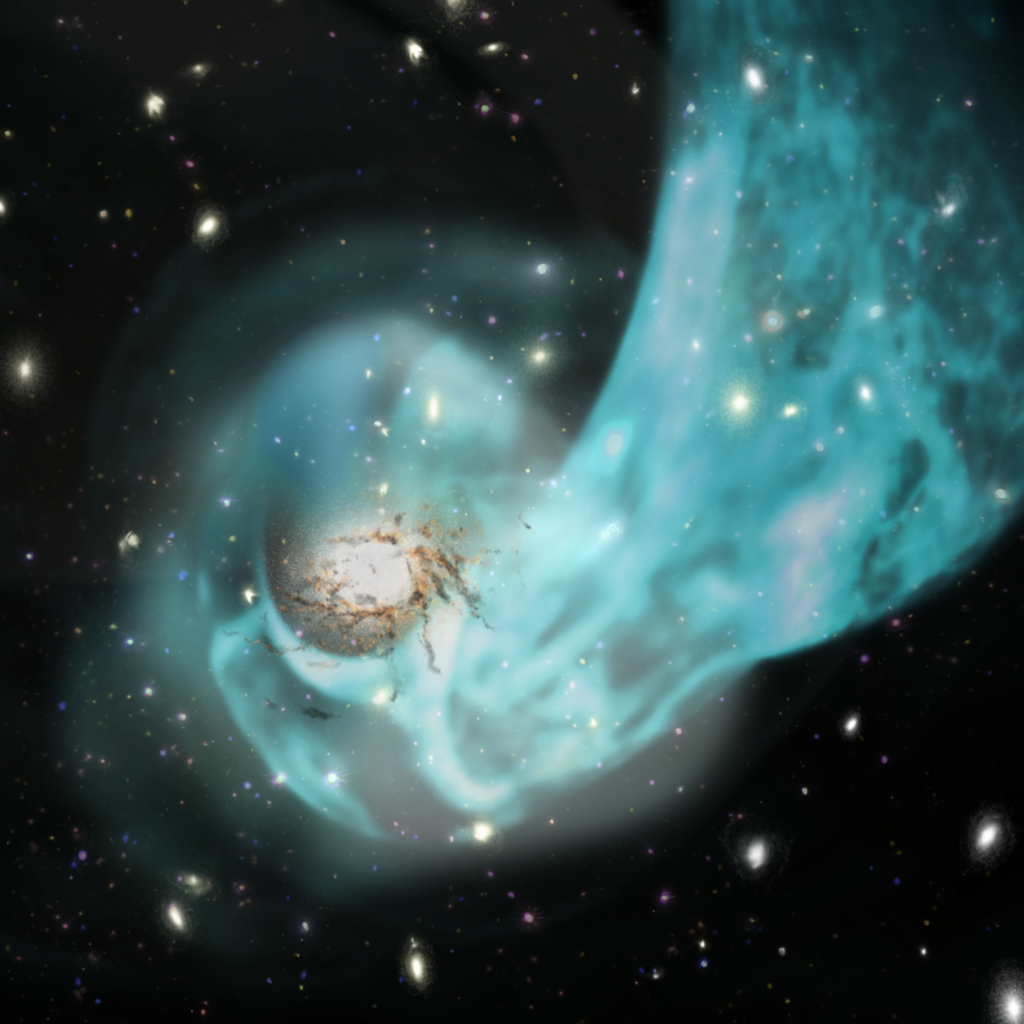
Using the XRISM X-ray telescope, astronomers have observed hot gas sloshing back and forth in the core of a cluster of galaxies. This provides the first direct evidence of gas motions driven by a collision on cosmic scales. Publication in Nature.
Month: February 2025
Ariel Consortium Meeting
The 2025 spring Ariel Consortium Meeting will be hosted by SRON Space Research Organisation Netherlands in Leiden, the Netherlands. The meeting will take place from April 9th to 11th. In addition April 8th has been reserved for a technical meeting.

Practical Information
More information about the Ariel Mission.
Registration for the meeting is done through Eventbrite.nl. Please indicate in your registration your participation for the meeting, technical meeting and/or the conference dinner SEPARATELY.
Local Organising Committee:
- Yamila Miguel (SRON)
- Billy Edwards (SRON)
- Michiel Min (SRON)
- Tim van Kempen (SRON)
- Janneke van Duijn (SRON)
For any queries, please contact us.

Duo of Satellites Detect Large Methane Emission from Ethiopian Volcano
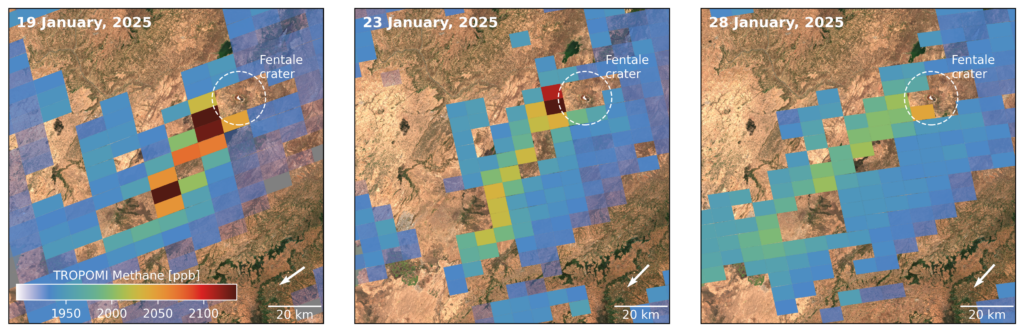
SRON—as part of the European CAMS service—and GHGSat have detected a substantial methane emission from Mount Fentale, an active volcano in Ethiopia. The emission, estimated at 58 metric tonnes per hour, was observed on January 31 through a “tip and cue” approach between Europe’s Copernicus program’s Sentinel-5P TROPOMI satellite instrument and GHGSAT’s satellite constellation, coordinated by SRON and GHGSAT.
Dutch satellite instrument SPEXone produces aerosol world map
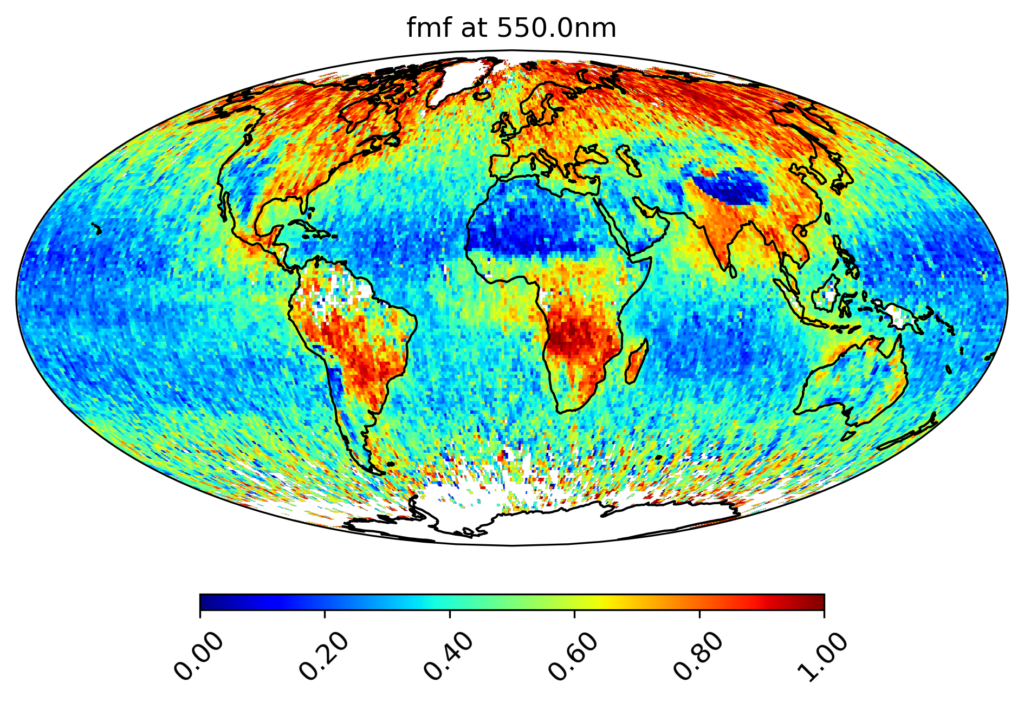
On February 8th 2024, NASA launched its PACE climate satellite with onboard the Dutch aerosol instrument SPEXone. A full year of observations now yields a world map of aerosols. It shows the distribution of fine and coarse aerosols and of particles that reflect or absorb sunlight. The latter respectively have cooling and warming effects on the climate. SPEXone was built by SRON and Airbus Netherlands, with support from TNO.