



Some objects and phenomena in the Universe can only be properly studied from space. For instance because they mainly emit radiation that is blocked by the Earth’s atmosphere, such as X-rays or infrared light. Weak light sources such as exoplanets are also best observed with space telescopes, because those are unhindered by light pollution and vibrations in the air.
Astrophysics
-
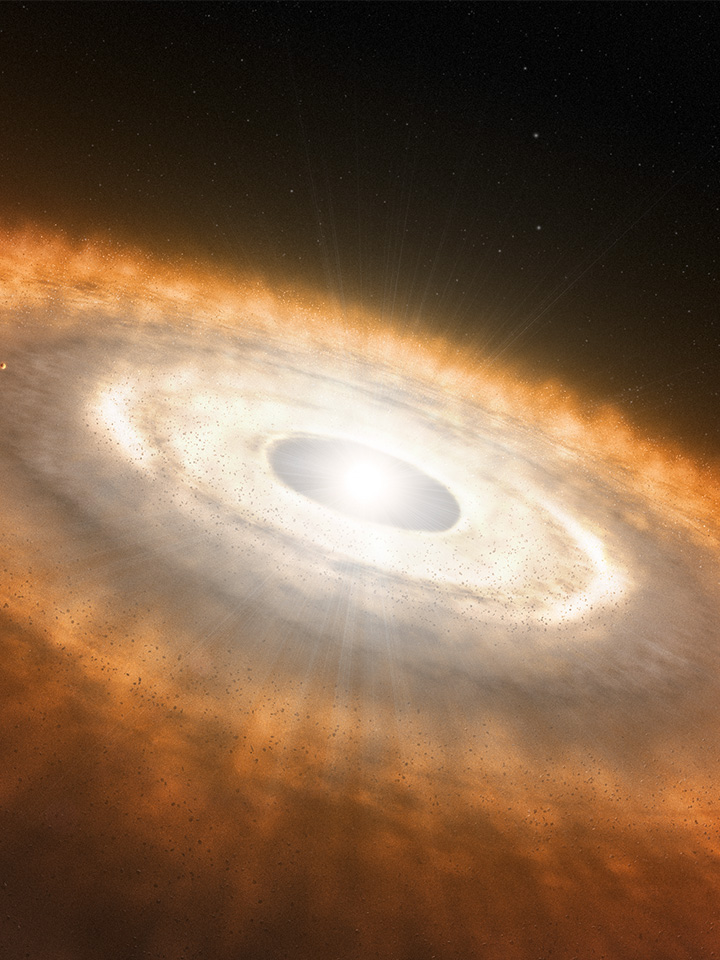
Cool universe

-
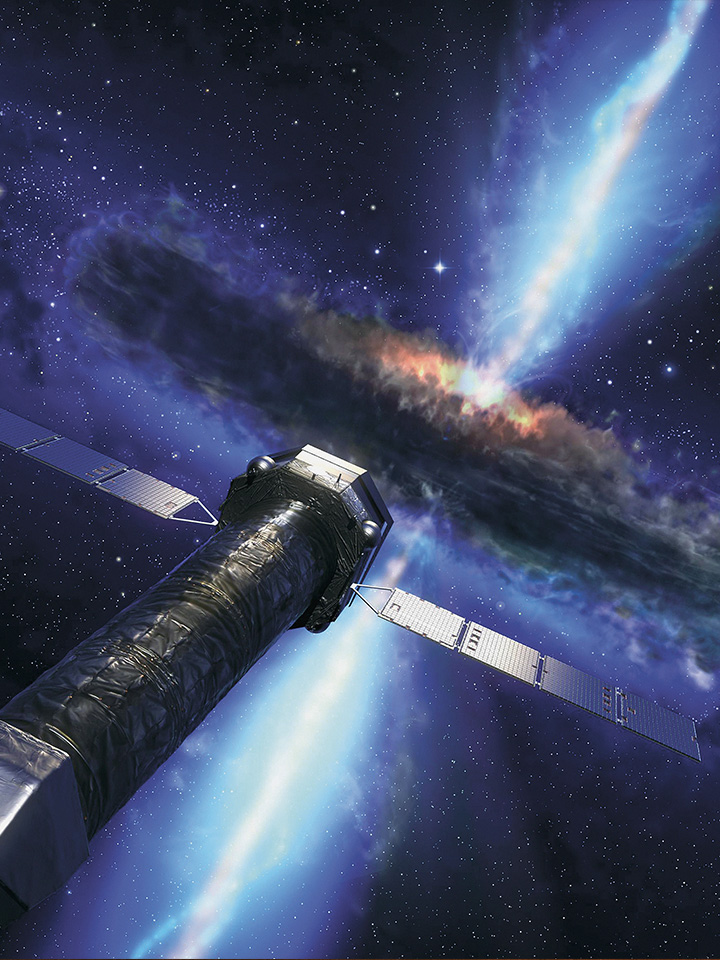
High energy
-
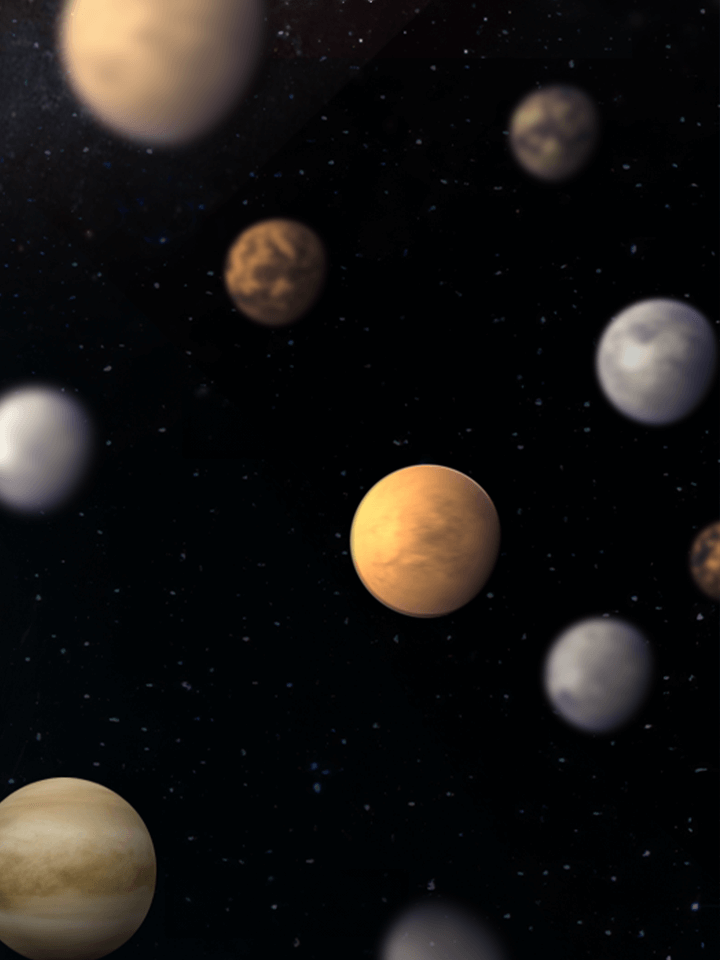
Exoplanets
Software Packages
To get the best scientific results from the measurement data of our instruments, we develop our own software. With those programmes, we can calculate what spectrum we expect to see for an object and compare it with the real measurement. We make this software available to everyone.

ARCiS
ARCiS is a novel code for the analysis of exoplanet transmission and emission spectra. The aim of the modelling framework is to provide a tool able to link observations to physical models of exoplanet atmospheres. The software is constantly being improved and has been used during the analysis of cutting-edge data from current facilities such as HST and JWST. It will also be used for fitting the data from the upcoming ESA Ariel mission.
Download and install
The easiest way to download and install ARCiS is via GitHub, click here
Help and documentation
The User guide is available at this link.
More information, including data downloads, can be found here.
RADEX
RADEX is a software package to calculate the strengths of molecular and atomic lines from homogeneous gas clouds in the infra-red and microwave band. The user can select a certain molecule and set the temperature, density, column density and line width. Based on these parameters, the program then calculates the position and strength of the emission lines. The program can be run through a web interface or offline on a Linux or Mac computer.
Download and install
The software, written in Fortran, is available for download.
The website also includes installation instructions assuming you have a Fortran compiler installed.
Information and help
The RADEX website also contains information about how to run the program. More information about the calculations can be found on Zenodo.
Questions or bug reports can be submitted as an issue to our Github issue tracker.
The source code of RADEX is available on Github and Zenodo under an Apache 2.0 license. Everyone is free to use the program. We do request that authors who make use of the RADEX program cite our paper: Van der Tak, F.F.S., et al. 2007 .

SPEX
SPEX is an X-ray spectral analysis software package optimized for the interpretation of high-resolution astrophysical X-ray spectra. The software is especially suited for fitting spectra obtained by current X-ray observatories like XMM-Newton, Chandra, Suzaku, and XRISM. SPEX will be continuously improved to handle spectra from high-resolution X-ray instruments on future missions like NewAthena.
SPEX is open source software and is distributed with a GPLv3 license. The source code is available on Zenodo.
Download and install
SPEX is developed for Linux and Mac systems, but can also run on the Windows subsystem for Linux (WSL) or using a virtual machine. More information about downloading and installing SPEX can be found using this link.
Help and documentation
The SPEX documentation is available on Github. For questions and bug reports, users can submit an issue to the Github repository.
Pyspextools
In addition to the SPEX package, we also have a Python package called pyspextools. This contains tools to convert between files in OGIP format and SPEX format. More information about Pyspextools can be found here:
The pyspextools package is distributed with the Apache 2.0 license.
Subscribe to our newsletter
Dissecting the Nuclear Structure of NGC 5548 with XRISM. I. Physical Properties of the Highly Ionized Outflows
01/09/2026 - High-Energy
We present a detailed spectral analysis of an X-Ray Imaging and Spectroscopy Mission (XRISM) observation of the prototypical Seyfert 1 galaxy NGC 5548. XRISM’s Resolve microcalorimeter reveals, for the first time, highly ionized outflows in this active galactic nucleus (AGN) through the detection of Fe XXV and Fe XXVI absorption lines in the Fe K…
Read more
Super-resolving Herschel: A deep-learning-based deconvolution and denoising technique: I. First application at 500 µm in the COSMOS field
01/09/2026 - Low-Energy
Aims. Dusty star-forming galaxies (DSFGs) dominate the far-infrared (FIR) and sub-millimetre (sub-mm) number counts, but singledish surveys at these wavelengths suffer from poor angular resolution, making identifications of multi-wavelength counterparts difficult. Prior driven deblending techniques require extensive fine-tuning and struggle to process large fields. This work aims to develop a fast and reliable deep-learning-based deconvolution…
Read more
Polarized reflectance in China from DPC-2/GF-5(02) polarimetric satellite measurements: dataset and model inter-comparison
01/09/2026 - Aerosols and clouds
The Bidirectional Polarization Distribution Function (BPDF) is essential in quantitative remote sensing, particularly for understanding the anisotropy of land surface polarization properties. The widely-used BRDF-BPDF dataset claimed to not corrected for aerosol scattering, which lay a hidden problem for BPDF modeling. In our work, we conducted aerosol correction based on Chinese polarimetric data DPC-2/GF-5(02), and…
Read more
Exoplanet programme: Vision
SRON’s Exoplanet team tackles the fundamental question of where the Solar System and the Earth fit within the diversity and evolution of planetary systems throughout the Universe. This question is fundamental to humankind and aligns with key scientific questions formulated by international scientific organisations such as ESA and NASA.
We address this fundamental question by studying the atmosphere, internal structure and formation of planets and their moons inside and outside the Solar System.
Addressing these questions requires a stability and wavelength coverage only achievable from space. Apart from air vibrations and blocking certain wavelengths, the Earth’s atmosphere also pollutes the data we can from a planet’s atmosphere.
Place in the community
We perform fundamental science, while serving as a hub connecting space missions, technology development, and the Dutch scientific community. This enables collaborations that are essential to realising our scientific vision. We ensure visibility, participation, and scientific roles for the Dutch community in exoplanet space missions.
We aim to be a group where researchers can grow scientifically and professionally, working in an open, collaborative, and inclusive environment at the interface of science, technology, and space missions.
High-energy programme: vision
The High-Energy group addresses two themes. What are the fundamental physical laws of the Universe? And how did the Universe originate and evolve and what is it made of?
This translates into studying the principles governing the cosmos, based on two pillars:
-Feedback: how the universe is enriched with metals and energy from our Galaxy to supermassive black holes and the cosmic web.
-Compact objects and their environment: how physics works in strong gravity and how objects accrete matter
High-energy astrophysics offers a privileged vantage point, as the most energetic phenomena emit radiation in the X-ray band and at the same time gravitational waves provide an extra independent messenger. This gives us direct access to otherwise invisible compact objects in binary systems and enables a multimessenger view of high-energy phenomena. These can only be studied from space. This scientific vision is an integral part of the SRON science mission life cycle: moving from science to innovative technology and instrumentation. These broad themes encompass not only present scientific interests but also future, unexplored frontiers.
Place in the community
The high-energy group occupies a leading position in the local and international scientific community by combining deep knowledge about our instruments, the radiation mechanisms in the sources we observe, data analysis methods and applied models. We strive to be a hub for innovation. While maintaining our core expertise in high-energy astrophysics, we are committed to defining the frontier, actively shaping new research directions.
Cool Universe programme: vision
SRON’s Cool Universe team works on unravelling the cold, the dusty, and the distant universe. Mid- and far infrared radiation (IR), observable only from space, penetrates any foreground dust and allows direct measurements of local physical conditions in cool objects. The IR is uniquely rich in spectroscopic diagnostics, and the cosmic background in the IR is as rich as the optical in terms of energy density and therefore also in terms of information on the structure of the universe.
These diagnostic tools enable research into a large range of subjects, from understanding our own solar system to the formation history and evolution of planet forming systems, to galaxy formation and evolution over cosmic timescales.
Jointly with the national and international astronomy community we identify opportunities to further develop research tools targeting these domains, both in instrumentation and modelling. We seek possibilities for collaborations with mission consortia pursuing such developments.
A large variety of astrophysics research domains are accessible in the IR domain, and further progress in these fields critically depends on that access. The Astro Cool Universe team currently focuses on galaxy evolution and star- and planet forming systems, but clearly the field also links to e.g. exoplanet research – all directly aligning with the priorities identified in e.g. Voyage 2050, Astro2020 and Astronet.
Place in the community
The backbone knowledge of SRON’s Cool Universe team will be expanded towards new directions of research and instrumentation development leading to targeted new mission and research proposals. We connect with other research institutes to foster collaborations towards such joint projects.
Our experts
-
 Read more
Terri Brandt
Head of Astrophysics Programme (Dr.)