



The TROPOMI satellite instrument detects thousands of methane plumes annually. On October 8, using its automated plume detection algorithm, SRON’s methane team came across a large methane plume over an area where they rarely see this – an oil field in Niger.
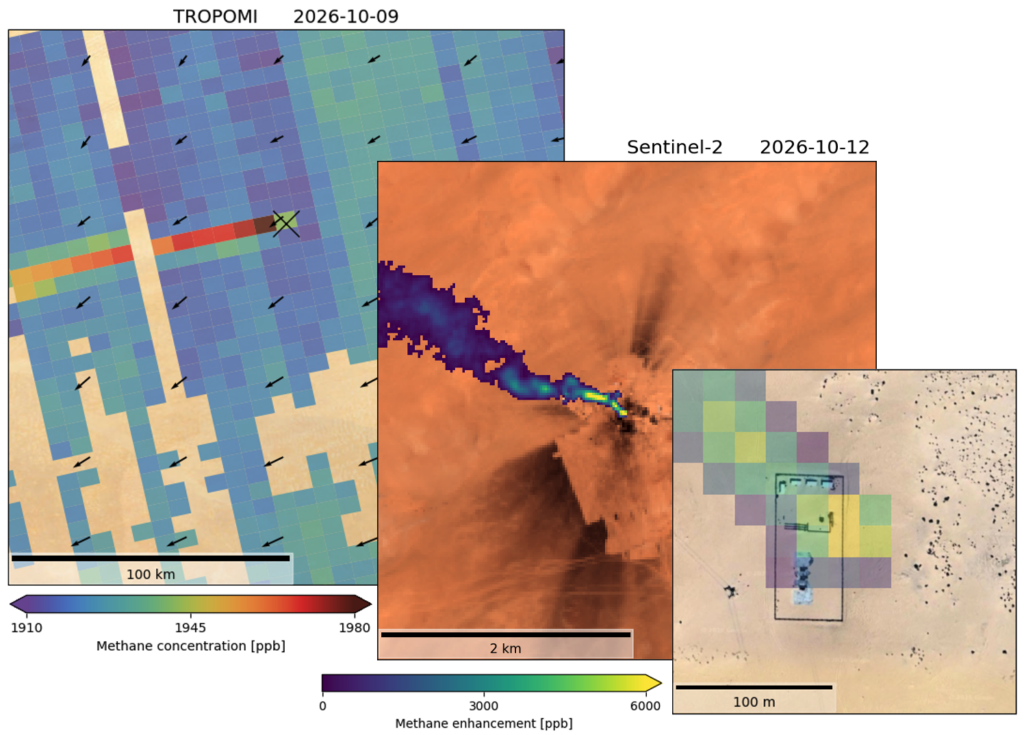
Analysis of Sentinel-2 data
Using a different satellite — Sentinel-2 — the researchers saw methane plumes and a large black spot around an oil well. This indicated that an incident had occurred in the preceding days. From additional satellite data, the team concluded that the emissions began on September 25. On October 8, the source was still emitting approximately forty tons of methane per hour.

SRON notified Copernicus Atmospheric Monitoring Service
On October 11, SRON reported the methane plume to the Copernicus Atmospheric Monitoring Service (whose Methane Hot Spot Explorer displays all TROPOMI detections). They notified the International Methane Emissions Observatory so that the responsible parties could be informed. SRON also contacted its partners in space research to obtain additional observations of the incident.
Exceptional environmental incident
On October 13, an article in Le Monde provided more insight into what happened; an explosion at the Goumeri W8 well in the Agadem oil field caused an exceptional environmental incident. On October 14, CAMS announced the initiale results of the ongoing monitoring. SRON continues to collaborate with its partners to combine all available satellite data for optimal monitoring and mitigation.
The image shows a TROPOMI plume from October 9 and a methane plume detected by Sentinel-2 from October 12, overlaid on visual imagery from the same day showing a (partially cleaned up) black spot around the location. The inset shows an enlargement of the origin of the Sentinel-2 plume overlaid on Google Maps archive imagery showing the facility.