


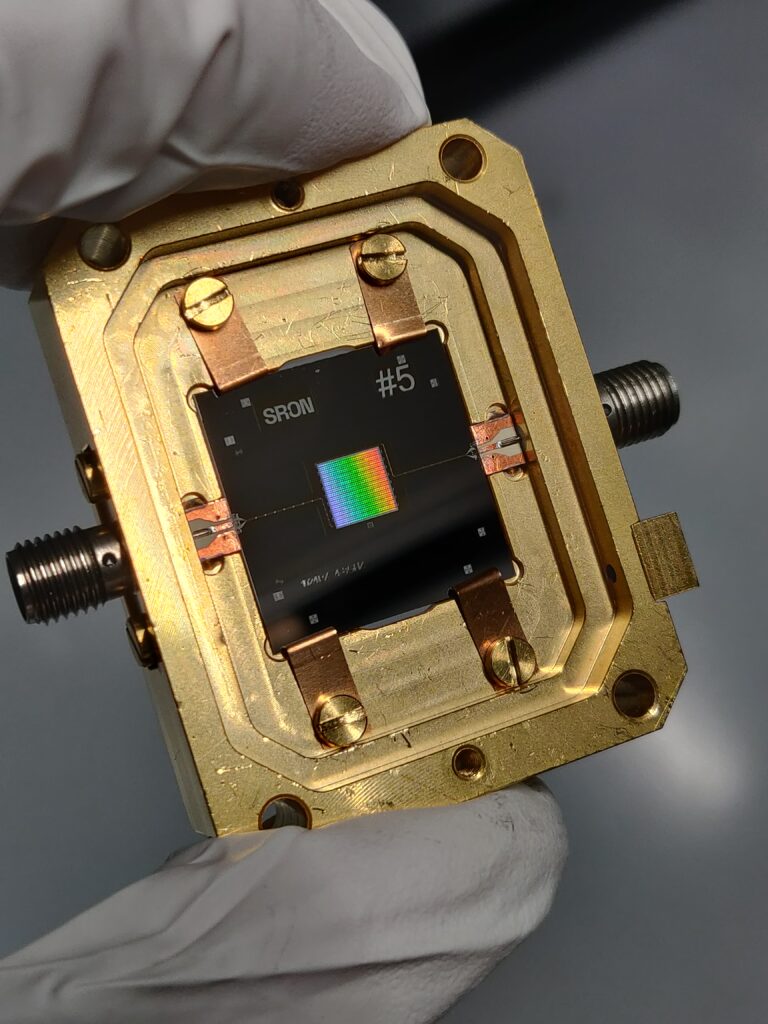
In the early 2040s, the Habitable Worlds Observatory will search for signs of life in the atmospheres of planets in the Milky Way. However, the detector technology to obtain the required precision does not exist yet. SRON researcher Pieter de Visser has now received an ERC Consolidator Grant to fill this gap over the next five years with his Kinetic Inductance Detectors (KIDs).
Month: December 2025
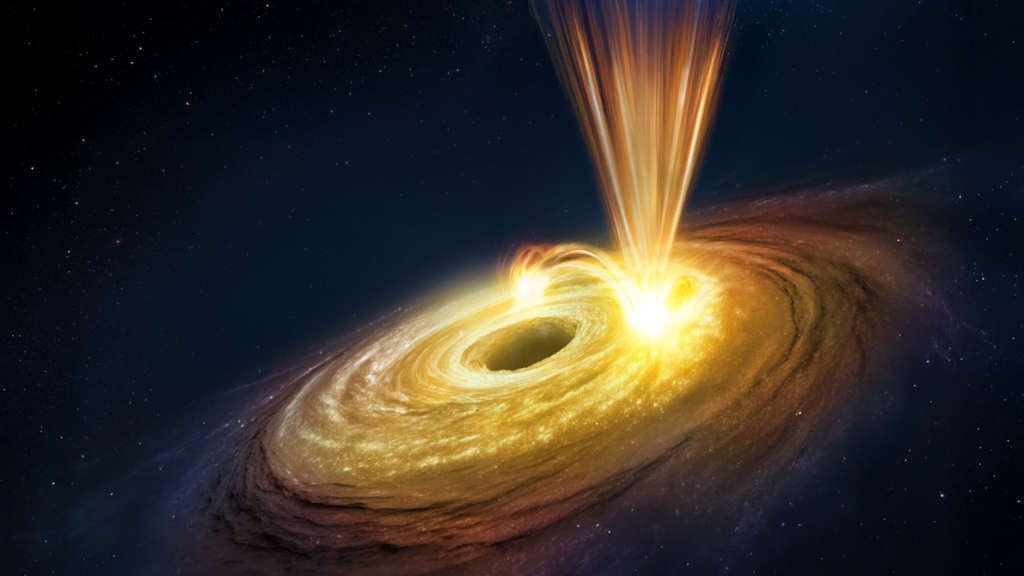
Black hole outburst observed similar to outbursts on the Sun
An international team of astronomers, led by SRON, has observed a sudden outburst of matter near the supermassive black hole NGC 3783 at speeds reaching up to 20% of the speed of light. During a ten-day observation, mainly with the XRISM space telescope, the researchers witnessed its formation and acceleration. Scientists often find that these outbursts are powered by strong radiation, but this time the most likely cause is a sudden change in the magnetic field, similar to bursts on the Sun that cause solar flares.
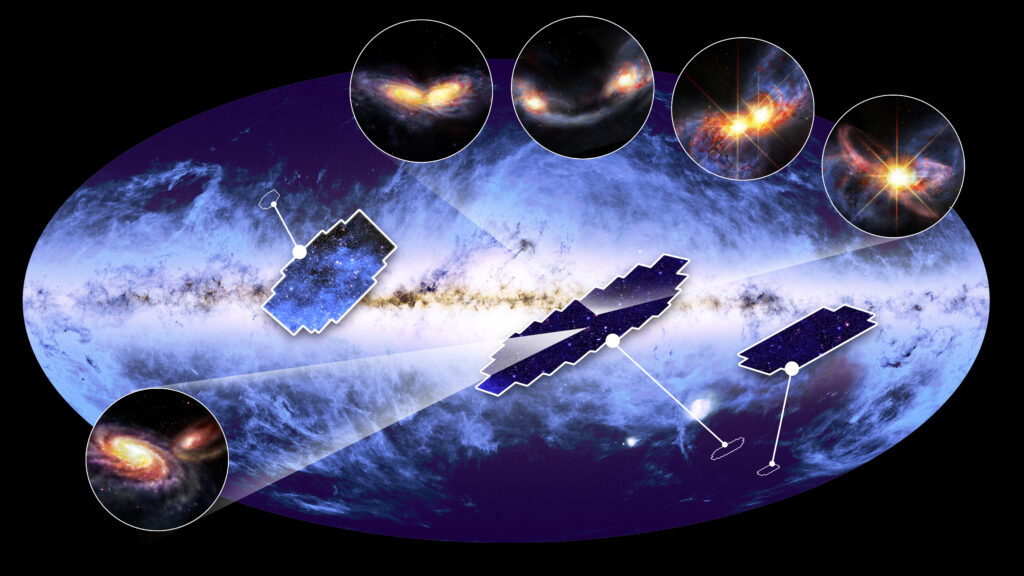
Euclid dataset of a million galaxies proves connection galaxy mergers and AGN
Astronomers have long debated the role of galaxy mergers in powering active supermassive black holes. Now an unprecedented dataset of a million galaxies from the Euclid telescope provides evidence that mergers play a dominant role and are even the primary trigger for the most luminous black holes.