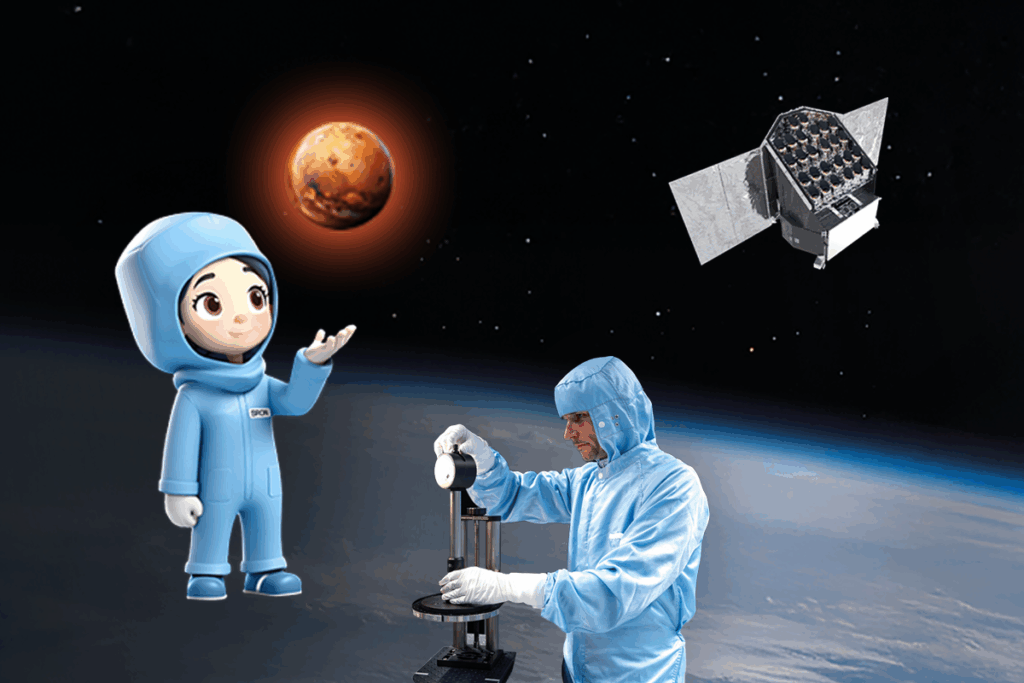



To study distant planets, SRON researchers are developing detectors that register the colour of each incoming photon. They are searching for a suitable material with a high degree of ‘disorder’ and therefore high electrical resistance in order to absorb as much light as possible. They have now discovered that too much disorder is also not ideal because it results in signal loss. Publication in Nature Communications.
Month: September 2025
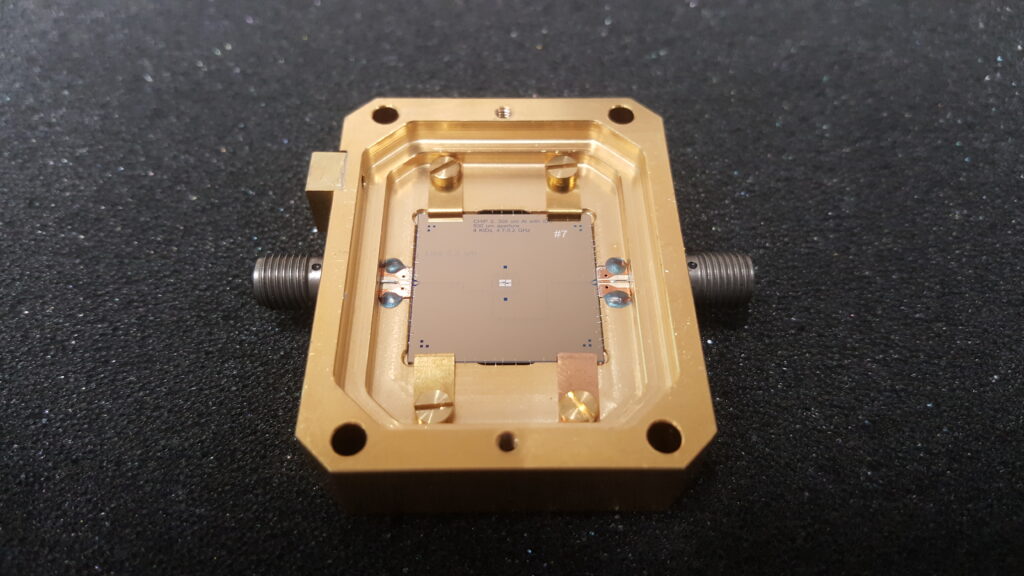
Assembly of Demonstration Model for X-IFU camera is complete
SRON is responsible for building the camera for the X-IFU imaging spectrometer onboard the NewAthena X-ray space telescope. A latest Demonstration Model has now been successfully assembled in SRON’s cleanroom and is mounted into a cryogenic test setup which cools the detector stage to a temperature of 50 milliKelvin.
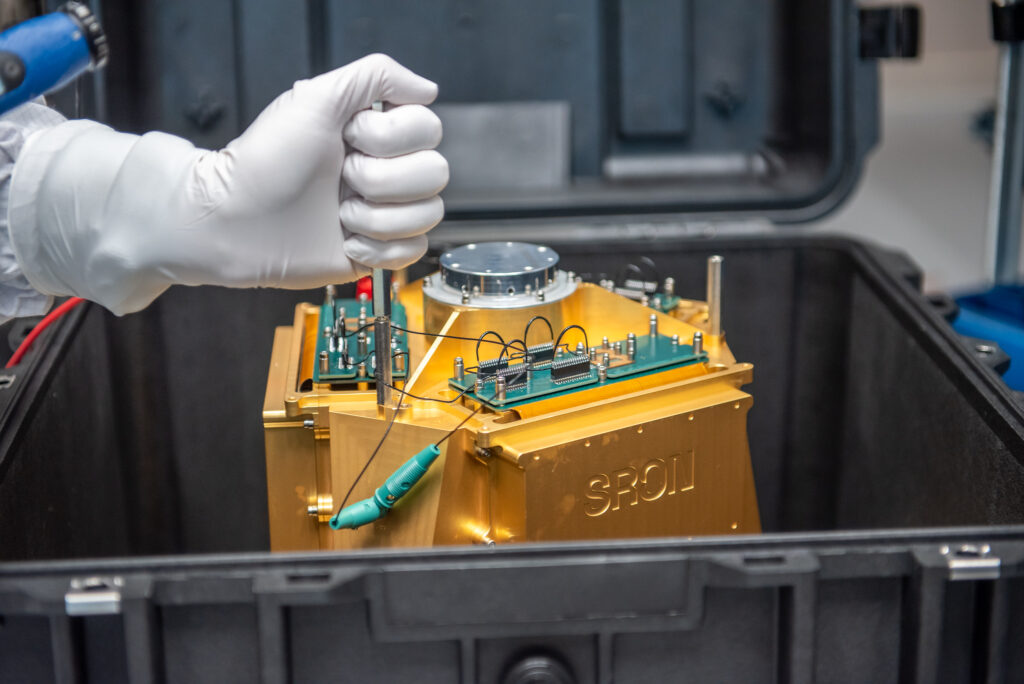
Far-infrared detectors for PRIMA supported by NSO Instrument Programme
The far-infrared detector that SRON is developing for NASA’s PRIMA space telescope will receive support from the NSO Instrument Programme. This will enable SRON to carry out flight tests before NASA makes a final decision on PRIMA.
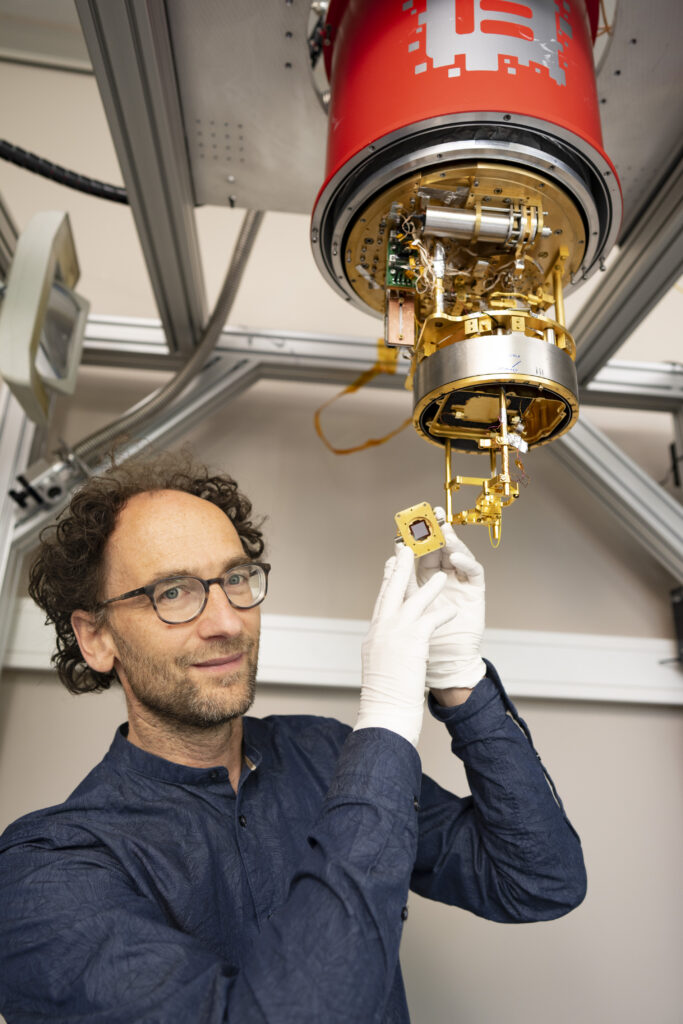
XRISM sees surprisingly slow and dense wind from neutron star
A team of XRISM researchers, including SRON astronomers, has seen a surprisingly slow and thick wind blowing from the disc around a neutron star. Instead of the 200 million km/h that winds from supermassive black holes typically reach, the neutron star GX13+1 blows out a wind of only one million km/h. SRON provided the filter wheel including calibration sources to XRISM’s Resolve instrument.
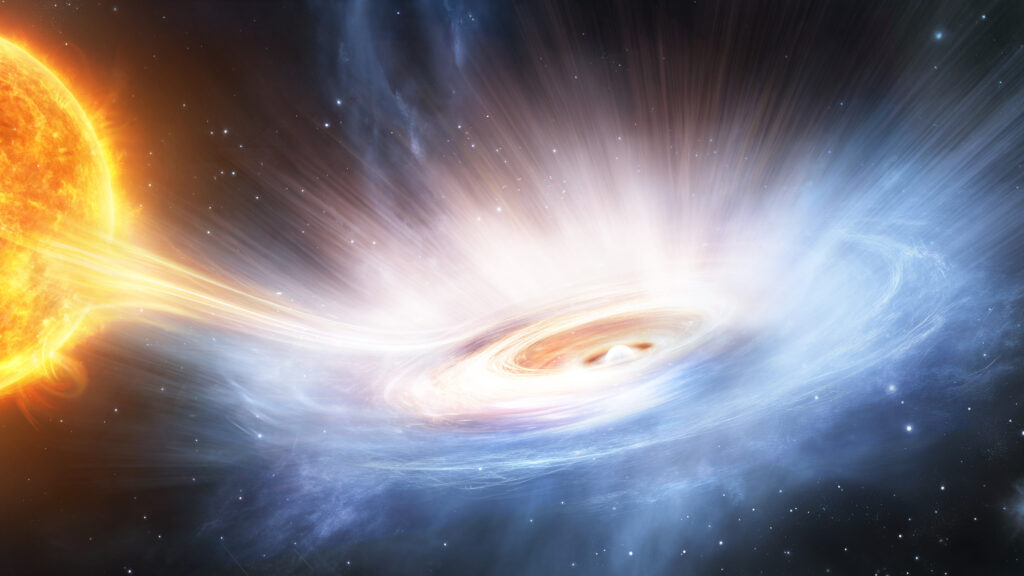
Gravitational Waves Celebrate 10-year Anniversary
Ten years ago, on 14 September 2015, the ground-based gravitational wave detector LIGO started its first observing run. About 1.4 billion years earlier, two black holes had collided in a far-away galaxy, producing a powerful gravitational wave. Already then, it was determined that the wave would reach the Earth on precisely 14 September 2015. Yet for it to become the first gravitational wave measured by humanity, a lot had to happen.
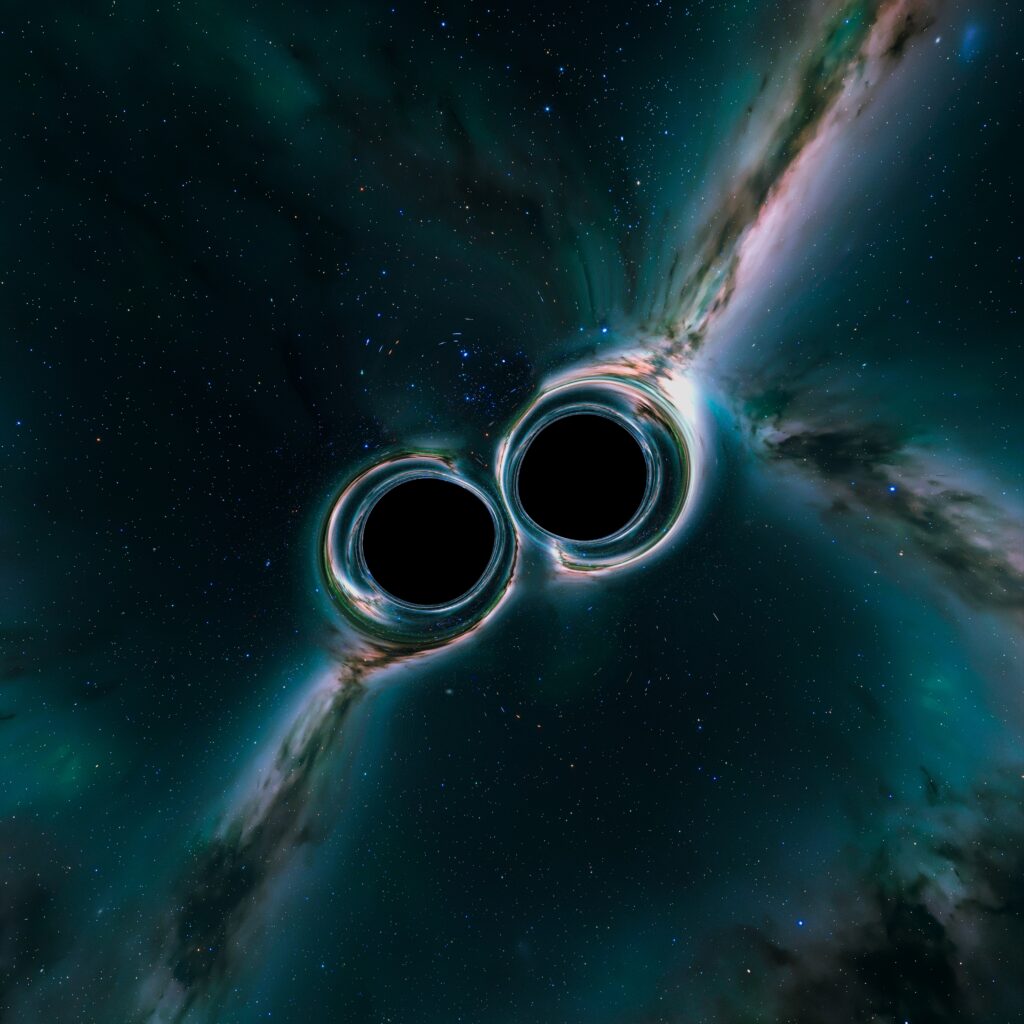
PLATO arrives in Noordwijk for final step towards launch
Are there planets similar to Earth? Do they orbit stars like our sun? Which type of parent stars and planets often go together? Which planets have an atmosphere that we can further investigate? From late 2026 onwards, the PLATO space telescope will search for answers.
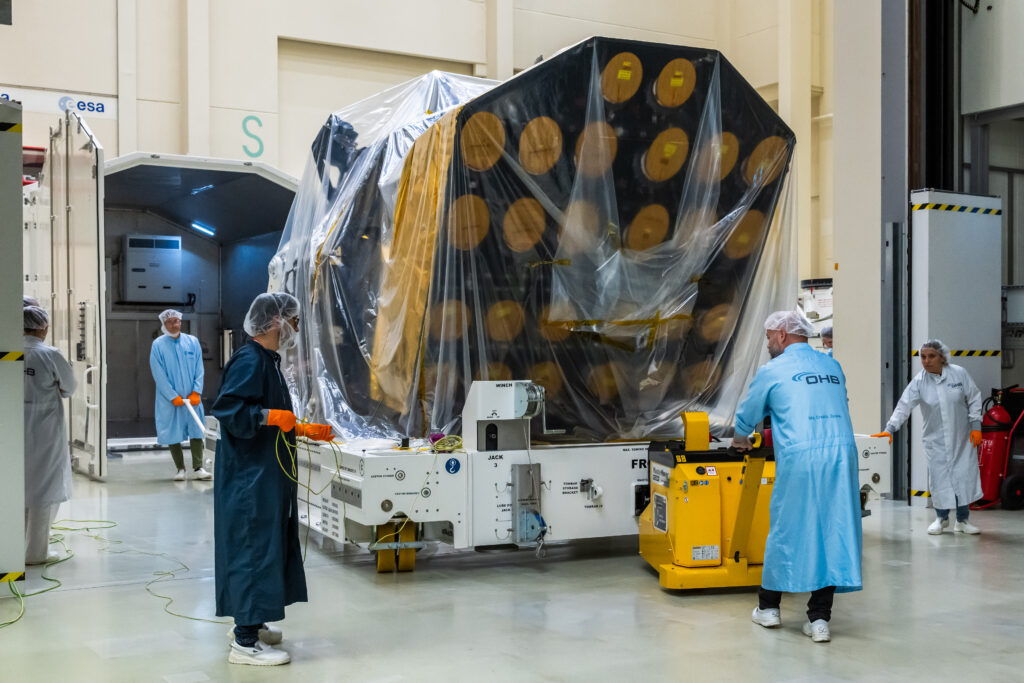
SRON Open Days on 5 and 11 October 2025
Who’s ready this October to step into the world of space research at the Space Research Organisation Netherlands (SRON)? The programmes are ready! Scroll down to download them.