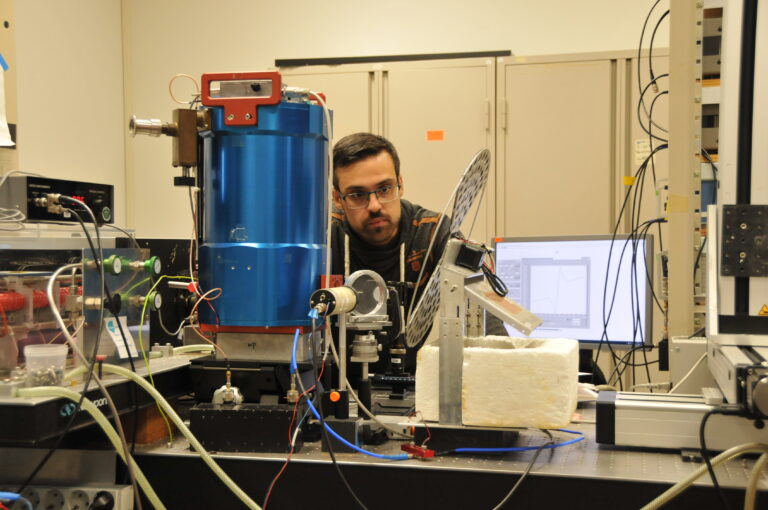



Kunnen we de grootste structuren in het universum onderzoeken door te kijken naar de kleinste deeltjes? Daarover gaat het onderzoek van Lydia Stofanova, promovendus aan de Leidse Sterrewacht en SRON—het Nederlandse instituut voor ruimteonderzoek. Ze bestudeert hoe elementen zoals zuurstof de grootschalige structuur van het universum beïnvloeden. Op 13 november verdedigde ze haar proefschrift.
Month: November 2024

PRELIFE consortium receives NWA grant to study origins of life
An interdisciplinary research consortium, including Floris van der Tak (SRON/RUG) and Michiel Min (SRON) has been awarded an NWA grant by the Dutch Research Council (NWO) to investigate the origin of life on Earth and in the universe. The so-called PRELIFE consortium (Pathways, Reactions and Environments) receives €6.7 million to explore this research question.
Gold antenna increases sensitivity detectors for proto-planetary systems
Researchers at SRON and TU Delft have made bolometer detectors thirty percent more sensitive. Bolometers form the heart of terahertz spectrometers that can distinguish colors up to one-millionth of their wavelength. This is needed to observe astrophysical processes such as the birth of stars and planets from gas and dust clouds. The enhancement should cut the time in half that it takes a space telescope to take a spectrum.
Golden antenna improves sensitivity detectors for proto planetary systems
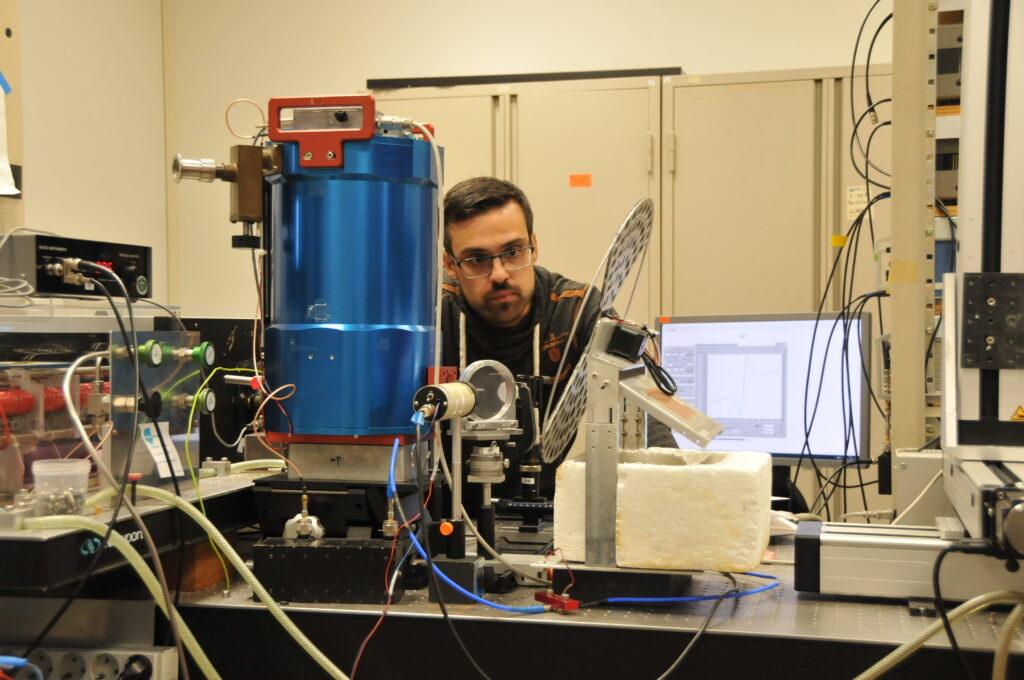
Researchers at SRON and TU Delft have made bolometer detectors thirty percent more sensitive. Bolometers form the heart of terahertz spectrometers that can distinguish colors up to one-millionth of their wavelength. This is needed to observe astrophysical processes such as the birth of stars and planets from gas and dust clouds. The enhancement should cut the time in half that it takes a space telescope to take a spectrum.