


On February 22th a final inspection took place of the Dutch space instrument SPEXone, in the presence of Dutch science minister Van Engelshoven (OCW) and NASA. Soon after the event the instrument will be transported to NASA. From 2023 onwards SPEXone will fly on NASA’s PACE mission, which will help researchers resolve climate issues. SPEXone is specifically developed to unravel the impact of areosols on the climate.
Month: February 2021

Natural geological methane emissions appear larger than expected
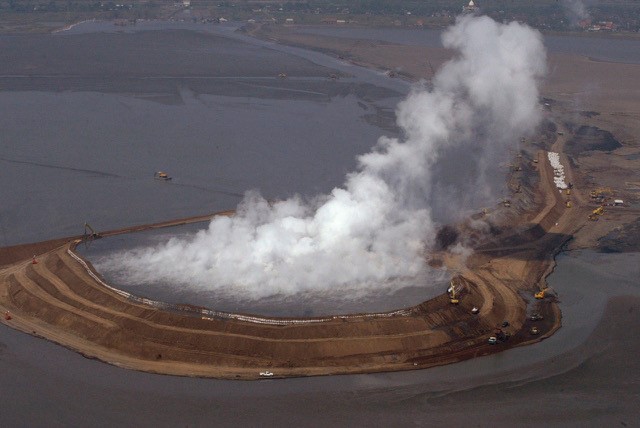
Geological methane sources can be either anthropogenic or natural, such as the oil industry or mud volcanoes. Ground-based measurements combined with TROPOMI observations on the Javanese mud volcano Lusi now show that the natural geological emissions are probably higher than expected. It would mean that we have to attribute a smaller share to man-made geological sources. On the other hand, other human activities should be held accountable for higher emissions, such as rice fields and livestock farming. Publication in Nature’s Scientific Reports.
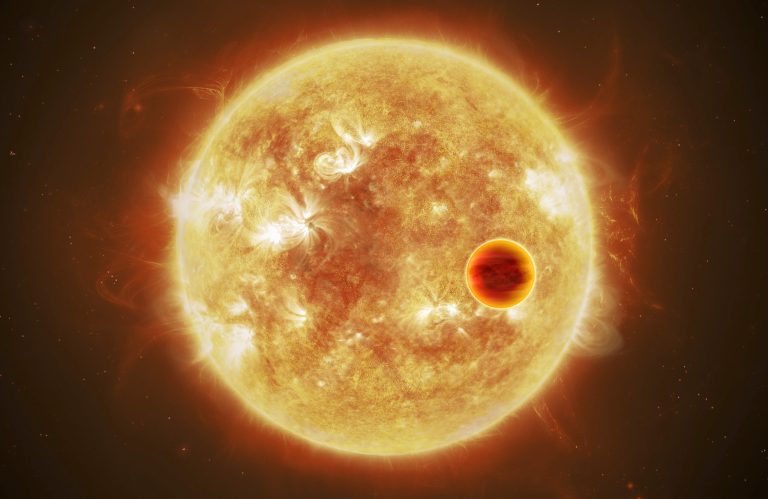
Evidence for substance at liquid-gas boundary on exoplanet WASP-31b
One of the properties that make a planet suitable for life is the presence of a weather system. Exoplanets are too far away to directly observe this, but astronomers can search for substances in the atmosphere that make a weather system possible. Researchers from SRON Netherlands Institute for Space Research and the University of Groningen have now found evidence on exoplanet WASP-31b for chromium hydride, which at the corresponding temperature and pressure is on the boundary between liquid and gas. Publication in Astronomy & Astrophysics on February 3rd.