


A team of astronomers led by SRON has observed ten times more hyper luminous galaxies in the infrared than stars can produce according to the models. If the theory is correct, it means that stars alone cannot account for the brightness of the most luminous infrared galaxies. Publication in a special issue of Astronomy & Astrophysics. On ArXiv on November 18th.
Month: November 2020
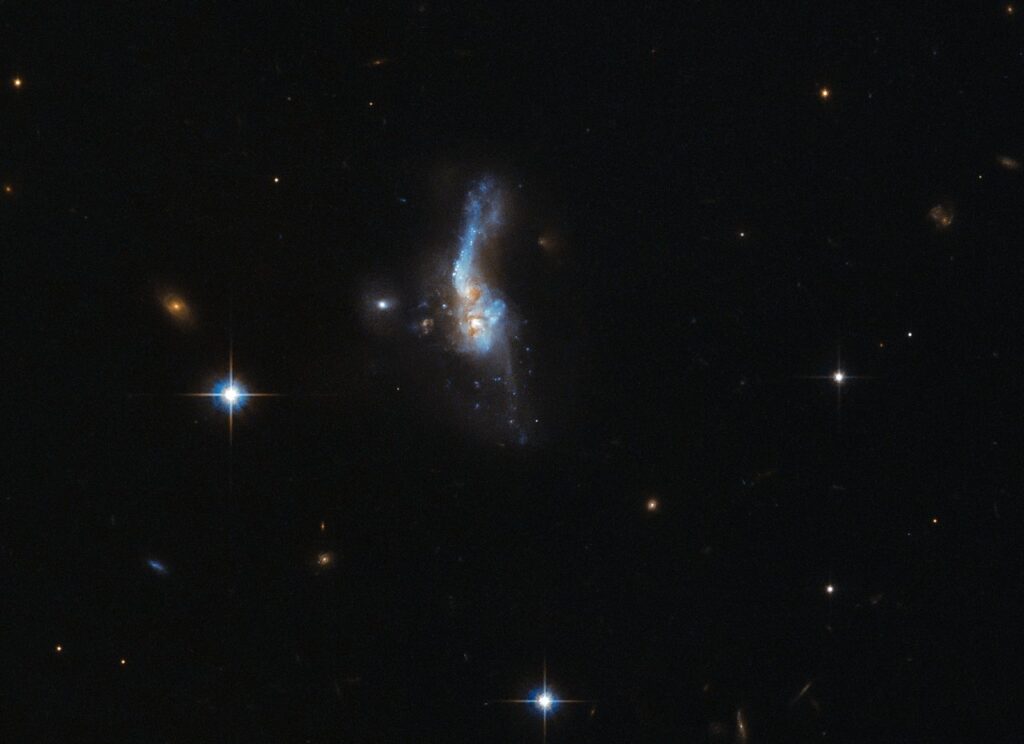
Vidi grant for studying galaxy mergers across cosmic time
Astronomer Lingyu Wang (SRON/RUG) receives an NWO Vidi grant to study merging galaxies. Wang will focus on the role of galaxy mergers in driving outbursts of star formation and black hole accretion. The grant allows her to create a team to join her in this research.

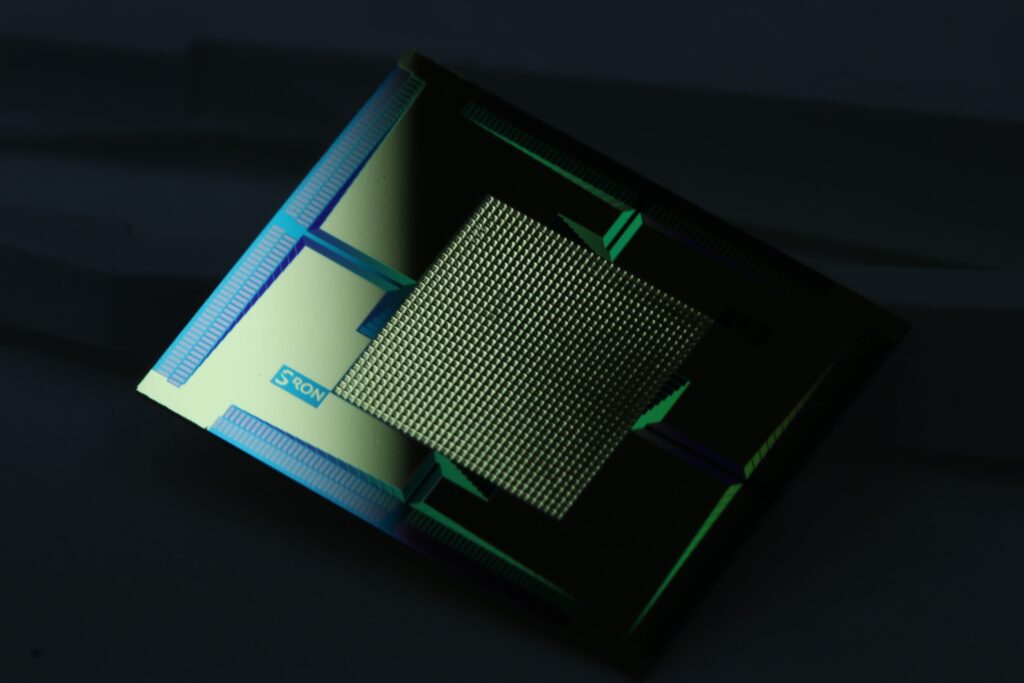
Technology ready for back-up detector X-IFU in Athena space telescope
In 2031, ESA launches its new X-ray space telescope Athena. SRON plays a large role in building one of its two instruments, the X-IFU spectrometer, by producing the camera plus the back-up detectors. SRON scientists have now successfully developed detectors that are optimized for a readout based on a special system called Frequency Domain Multiplexing. They set a new world-record energy resolution at 6 keV of 1.3 eV.
Astronomers see collisions of galaxy clusters at seven billion lightyears
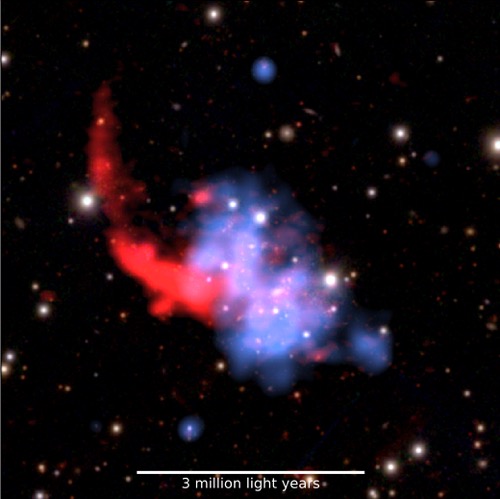
An international team of researchers, including Aurora Simionescu (SRON / UL) has mapped nine gigantic collisions of galaxy clusters. The collisions took place seven billion years ago and could be observed because they accelerate particles to high speeds. It is the first time that collisions of such distant clusters have been studied. Publication in Nature Astronomy.