



 Back to the story of SRON
IRAS reveals the hidden cosmos
1983
In 1983, the cosmos as we knew it suddenly became 1.7 times richer thanks to the Infrared Astronomical Satellite (IRAS). The idea originated with Dutch space researchers and the then Netherlands Institute for Aircraft Development and Spaceflight.
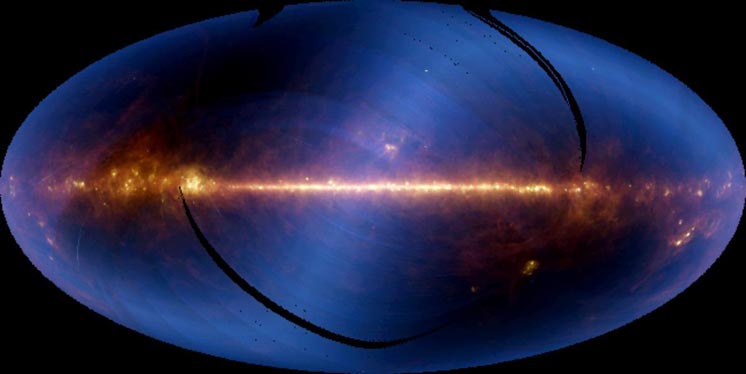
The American-built main instrument produced the first thermal map of the sky, identifying 350,000 infrared sources. This increased the total number of celestial sources known up to that point by 70 per cent.
The Space Research Laboratories in Groningen and Utrecht, together with TNO-TPD, provided two analytical instruments for detailed study. The spectroscope (LRS) examined the chemical fingerprint of 5,000 sources. This provided insight into smouldering old stars and how some are shrouded in soot, whilst others are more enveloped in glass and sand particles. The photometer (CPC) zoomed in on interesting discoveries made by the main instrument, carrying out at least 1,500 detailed measurements, such as of dusty stellar nurseries, dust discs around stars, and the distribution of dust across the spiral arms of nearby galaxies.
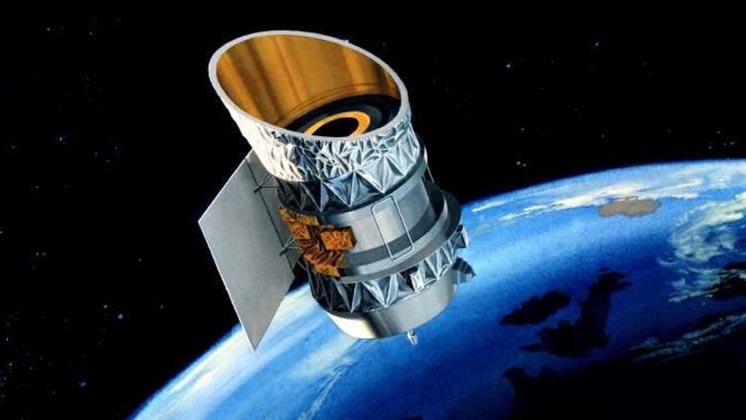
IRAS was developed in collaboration with the UK and the US. The US was responsible for the launch and the cooled mirror system housing the main instrument for mapping the sky. Fokker and Hollandse Signaal built the satellite, including the solar panels, on-board computer and attitude control system. The UK provided the ground-based tracking system.
- The Milky Way’s invisible infrared light has been measured for the first time. The number of sources we know exist has increased by a factor of 1.7.
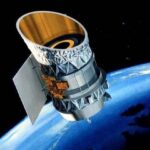
- The IRAS spacecraft.
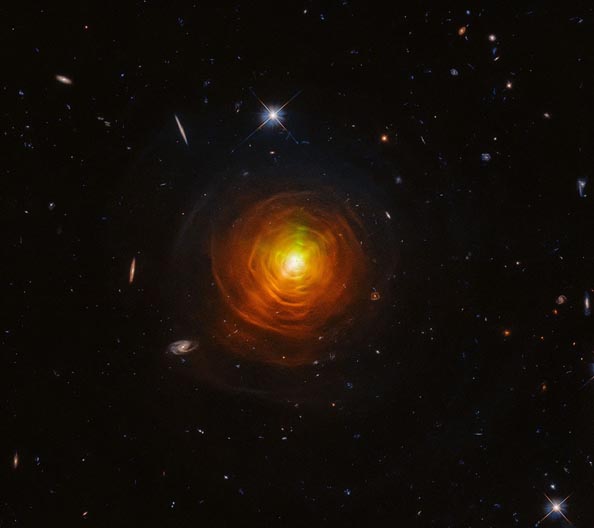
- The dying carbon star CW Leonis, surrounded by thick clouds of dust and gas, as seen through the eyes of Hubble.
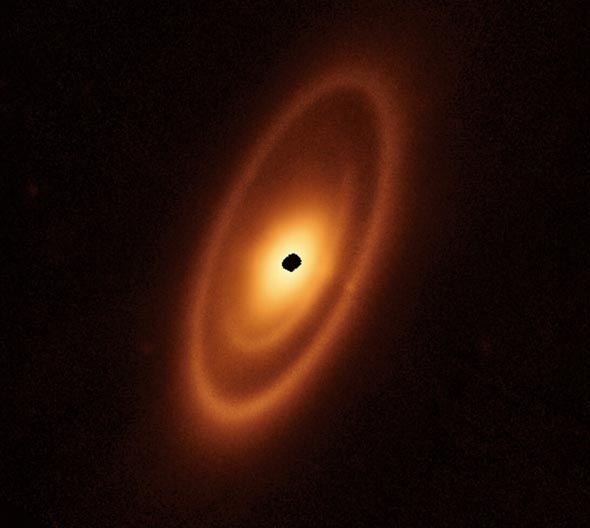
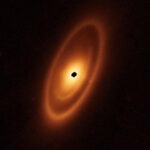
- IRAS discovered that the young star Fomalhaut is surrounded by a debris disc. We later learnt that such discs mark the beginning of planet formation.
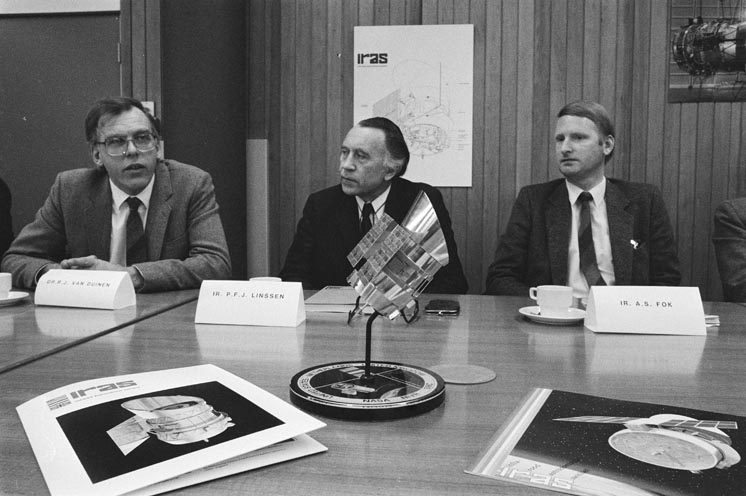
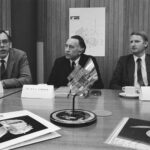
- The Dutch consortium.