





Our publications
The effect of the atmospheric C/O ratio on interiors of hot Jupiters
01/10/2026 - Exoplanets
The atmosphere is the outer boundary of a gas giant exoplanet’s interior. Therefore, compositional changes in the atmosphere can affect interior inferences. Typically, only metallicity is considered in atmospheric boundary conditions, while other elemental ratios, in particular the C/O ratio, are assumed to be solar. In light of the observational constraints now achievable with James…
Read more
Can the long-term impact of stellar M-dwarf flares alter the spectral features of a giant gaseous exoplanet?
01/10/2026 - Exoplanets
In this work, we model the long-term impact of recurrent stellar flares on the atmospheres of metal-rich gaseous exoplanets. Using synthetic flare spectra from a fiducial flare model integrated with a photochemical kinetics code, we track the changes in atmospheric composition with time. We further analyze the spectral variability by feeding these abundance profiles into…
Read more
Dissecting the Nuclear Structure of NGC 5548 with XRISM. I. Physical Properties of the Highly Ionized Outflows
01/09/2026 - High-Energy
We present a detailed spectral analysis of an X-Ray Imaging and Spectroscopy Mission (XRISM) observation of the prototypical Seyfert 1 galaxy NGC 5548. XRISM’s Resolve microcalorimeter reveals, for the first time, highly ionized outflows in this active galactic nucleus (AGN) through the detection of Fe XXV and Fe XXVI absorption lines in the Fe K…
Read more
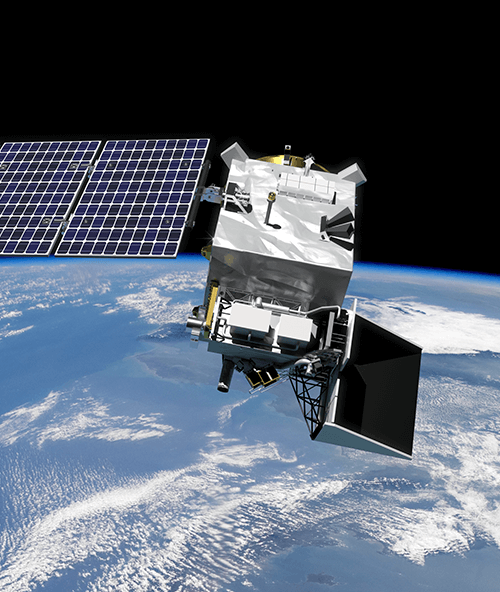
Polarized reflectance in China from DPC-2/GF-5(02) polarimetric satellite measurements: dataset and model inter-comparison
01/09/2026 - Aerosols and clouds
The Bidirectional Polarization Distribution Function (BPDF) is essential in quantitative remote sensing, particularly for understanding the anisotropy of land surface polarization properties. The widely-used BRDF-BPDF dataset claimed to not corrected for aerosol scattering, which lay a hidden problem for BPDF modeling. In our work, we conducted aerosol correction based on Chinese polarimetric data DPC-2/GF-5(02), and…
Read more
Super-resolving Herschel: A deep-learning-based deconvolution and denoising technique: I. First application at 500 µm in the COSMOS field
01/09/2026 - Low-Energy
Aims. Dusty star-forming galaxies (DSFGs) dominate the far-infrared (FIR) and sub-millimetre (sub-mm) number counts, but singledish surveys at these wavelengths suffer from poor angular resolution, making identifications of multi-wavelength counterparts difficult. Prior driven deblending techniques require extensive fine-tuning and struggle to process large fields. This work aims to develop a fast and reliable deep-learning-based deconvolution…
Read more
Probable Detection of a Cooler Gas Component in the Perseus Cluster with XRISM
01/09/2026 - High-Energy
We present an analysis of the temperature structure of the Perseus cluster atmosphere using X-Ray Imaging and Spectroscopy Mission (XRISM) Resolve observations. The average temperature rises from 3.3 keV near the nucleus of NGC 1275 to 8 keV at 10′ (210 kpc), which is consistent with Chandra and XMM measurements. The velocity and velocity dispersion…
Read more

Michael Wise
General and Scientific Director of SRON (Prof. Dr.)
“To work at an institute at the forefront of new technology, new space missions and new answers to scientific questions is incredibly inspiring.”