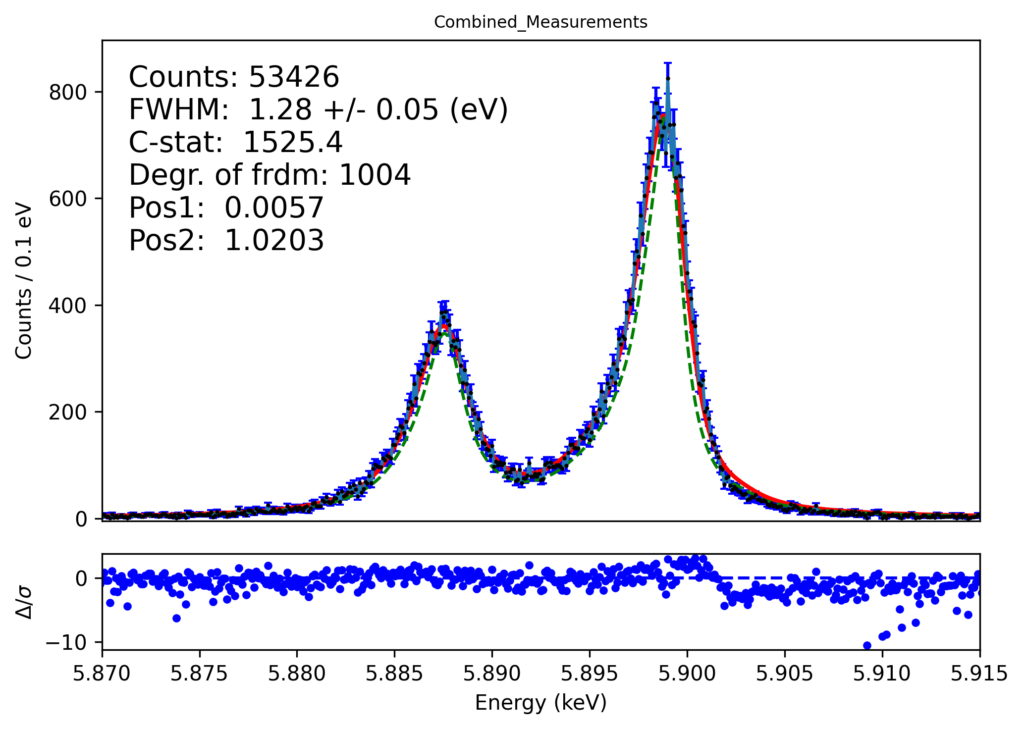



Transition edge sensors (TES) can measure the energy carried by a single X-ray photon from i.e. a black hole, or faint infrared light from protoplanetary disks, or the cosmic microwave background.. They work by exploiting a special property of certain materials that become superconducting at temperatures close to absolute zero. Right at the boundary between the normal and superconducting state, called the transition edge, a tiny change in temperature causes a large change in electrical resistance. When an X-ray photon or a bit of infrared or microwave radiation is absorbed, the resulting temperature rise produces a measurable electrical signal, allowing scientists to determine the energy of the incoming radiation with remarkable precision.
Microcalorimeters and bolometers
At SRON, researchers have been developing and refining TES technology since the 1990s, pushing the limits of what these detectors can do. For X-ray astronomy, SRON’s TES microcalorimeters can distinguish fine differences in photon energy, revealing the chemical composition, motion, and physical conditions of hot cosmic objects such as galaxy clusters and black holes. For infrared and microwave detection, TES bolometers are designed by SRON to measure signals from cold dust clouds and the early universe. Alongside the sensors themselves, SRON has made advances in the cryogenic electronics and readout systems needed to operate large arrays of TES detectors efficiently.

Space applications
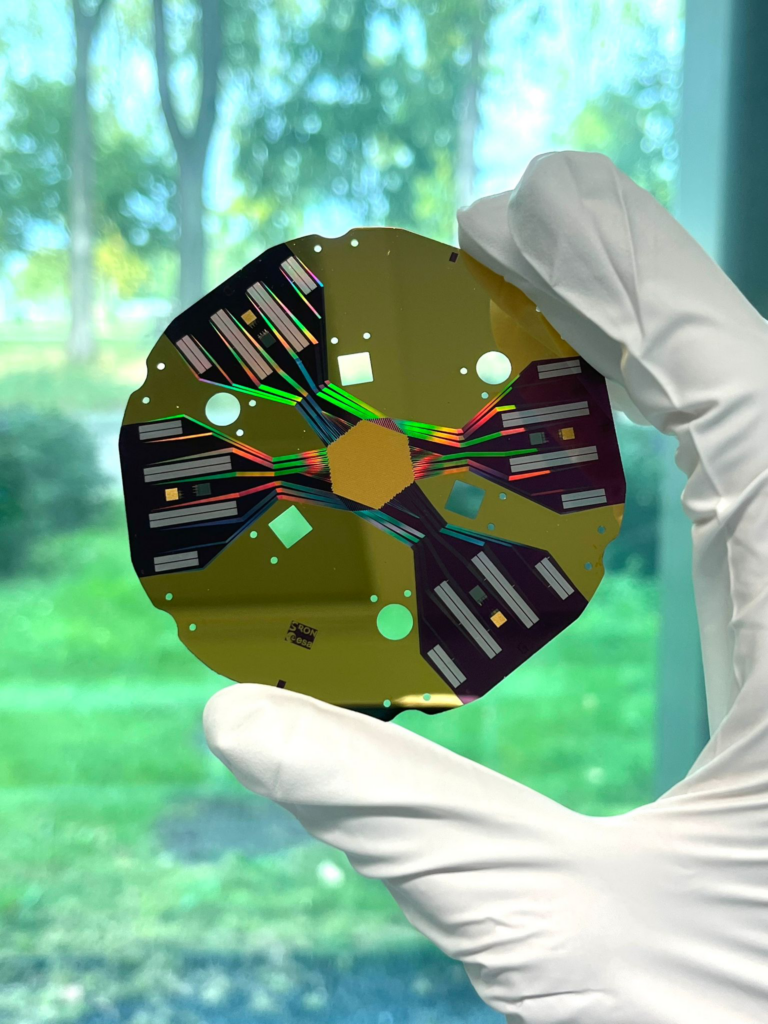
This technology opens the door to a wide range of exciting applications in which SRON plays a leading role. In space science, TES detectors are a cornerstone of future missions such as the NewAthena X-ray observatory and the LiteBIRD mission to study the cosmic microwave background. On Earth, similar detectors can be used for advanced material analysis, enabling precise identification of elements using X-ray spectroscopy. TES technology is also being explored for fusion research, where it can help diagnose high-temperature plasmas in experimental reactors. Together, these applications show how SRON’s work on TES contributes not only to understanding the universe, but also to solving challenging problems closer to home.