



Researchers from SRON and TU Delft have designed a shape for aluminium that turns it from a shiny metal into a black absorber of far-infrared light. ‘This was the final hurdle in the development of KID detectors for NASA’s candidate mission PRIMA.’ Publication in IEEE.
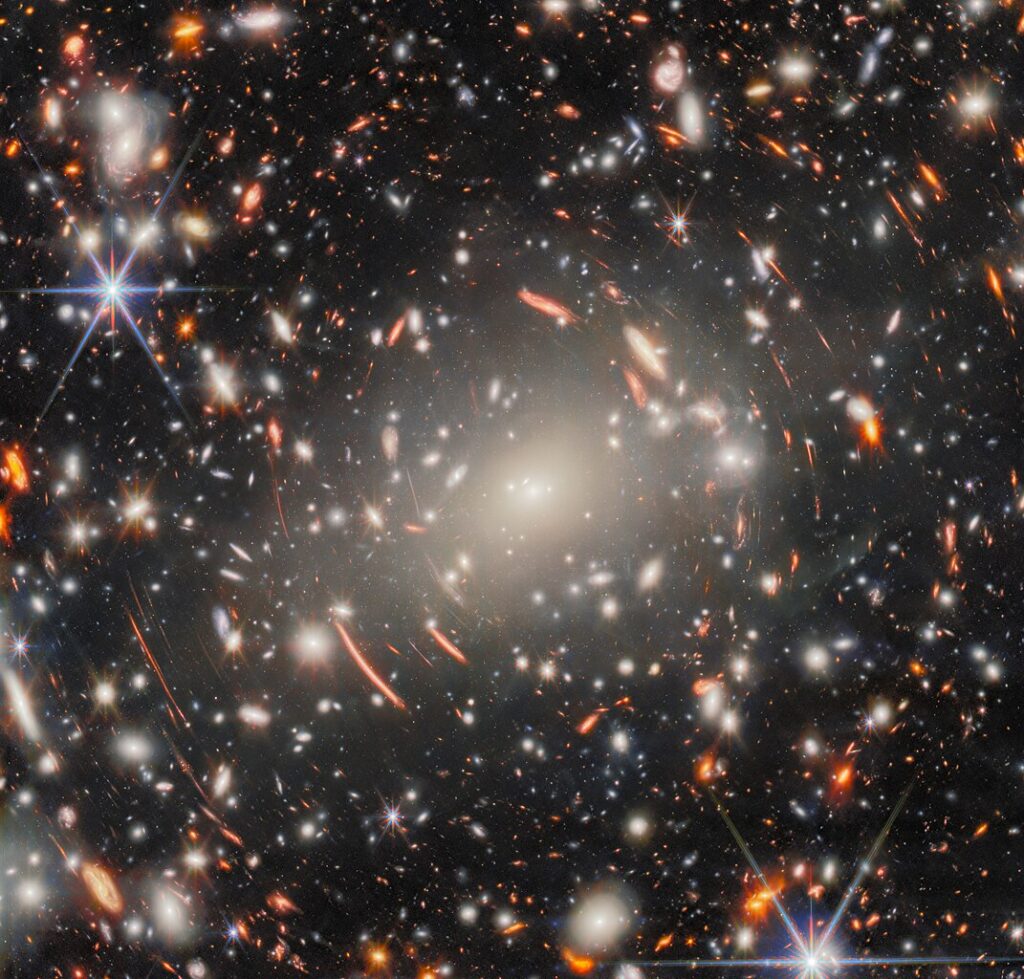
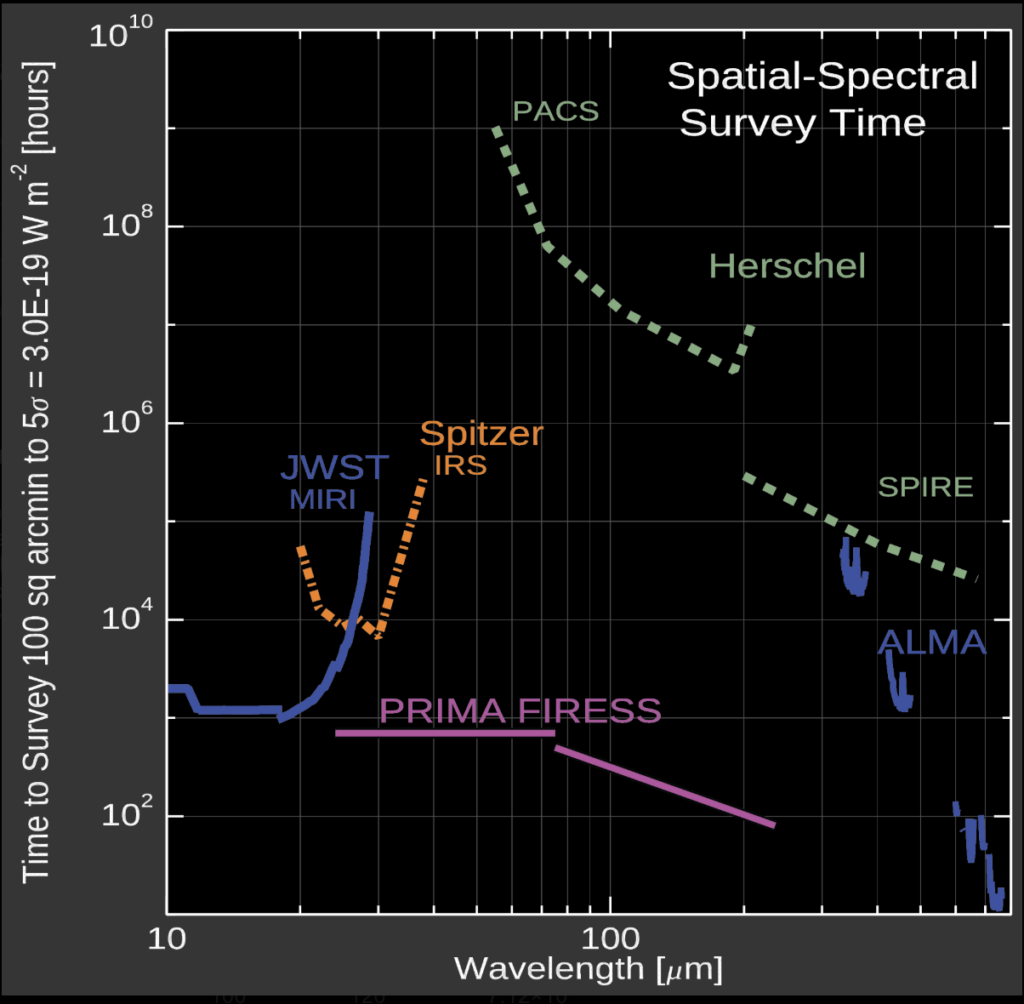
The PRIMA far-infrared space telescope is one of two remaining candidates to be selected as NASA’s Probe mission. If selected, PRIMA will be launched at the end of this decade. SRON delivers the detectors, based on a technology called Kinetic Inductance Detectors (KID). These are so sensitive that PRIMA only needs a few millionths of the observation time compared to the previous far-infrared mission Herschel. The light from the early Universe reaches us at far-infrared wavelengths. So PRIMA gives us a look at the first galaxies with a million times more sensitivity.

space ready
Meanwhile, SRON researchers are working hard to get the KIDs developed and space ready. ‘Now we have taken the final hurdle to start producing them,’ says team leader Jochem Baselmans (SRON/TU Delft). They have designed a specific shape for the only applicable material—aluminium—in which it works as an efficient radiation absorber. This is far from trivial as aluminium is a shiny metal that tends to reflect light rather than absorb it.
20 nanometer thick
The team, including first author Shahab Dabironezare (TU Delft), has found a way to make a the shiny aluminium absorbing by creating a shape from meandering narrow and thin aluminium strips of 300 nanometer wide and 20 nanometer thick. For comparison: a human hair is a thousand times thicker.
Publication
Shahab O. Dabironezare, Giulia Conenna, Daan Roos, Dimitry Lamers, Daniela Perez Capelo, Hendrik M. Veen,
David J. Thoen, Vishal Anvekar, Stephen J. C. Yates, Willem Jellema, Robert Huiting, Lorenza Ferrari, Carole
Tucker, Sven L. van Berkel, Peter K. Day, Henry G. Leduc, Charles M. Bradford, Nuria Llombart, and Jochem J.
A. Baselmans, ‘Lens Based Kinetic Inductance Detectors With Distributed Dual Polarized Absorbers for Far Infrared Space-Based Astronomy’, IEEE Transactions on Terahertz Science and Technology