



An international team of astronomers, led by SRON, has observed a sudden outburst of matter near the supermassive black hole NGC 3783 at speeds reaching up to 20% of the speed of light. During a ten-day observation, mainly with the XRISM space telescope, the researchers witnessed its formation and acceleration. Scientists often find that these outbursts are powered by strong radiation, but this time the most likely cause is a sudden change in the magnetic field, similar to bursts on the Sun that cause solar flares.
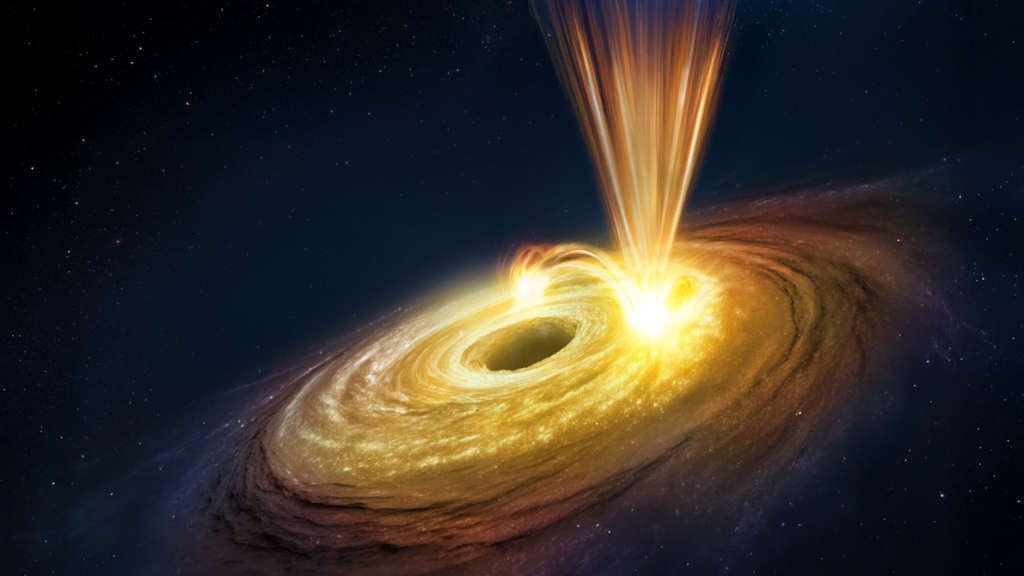
While supermassive black holes are known to flicker in X-rays, this is the first time astronomers clearly see a high-speed ejection accelerated during an X-ray burst. It was revealed in the longest continuous observation XRISM has carried out so far. During this ten-day period, scientists saw variations in X-ray brightness, especially in the softer X-ray band. These changes, including the outburst that lasted for three days, are not unusual for supermassive black holes.

Twenty percent lighspeed
However, what makes this outburst unique is the simultaneous ejection of gas from the accretion disk of the black hole — the swirling disk of matter orbiting the black hole. This gas was expelled at incredibly high speeds, reaching up to 60,000 kilometers per second, or 20% of the speed of light.
magnetic reconnection
The gas appeared to come from a region at a distance of roughly fifty times the size of the black hole. In this turbulent region, gravity and magnetic forces interact in extreme ways. The authors believe the ejection was caused by a process called magnetic reconnection: a sudden reconfiguration of magnetic fields that releases huge amounts of energy.
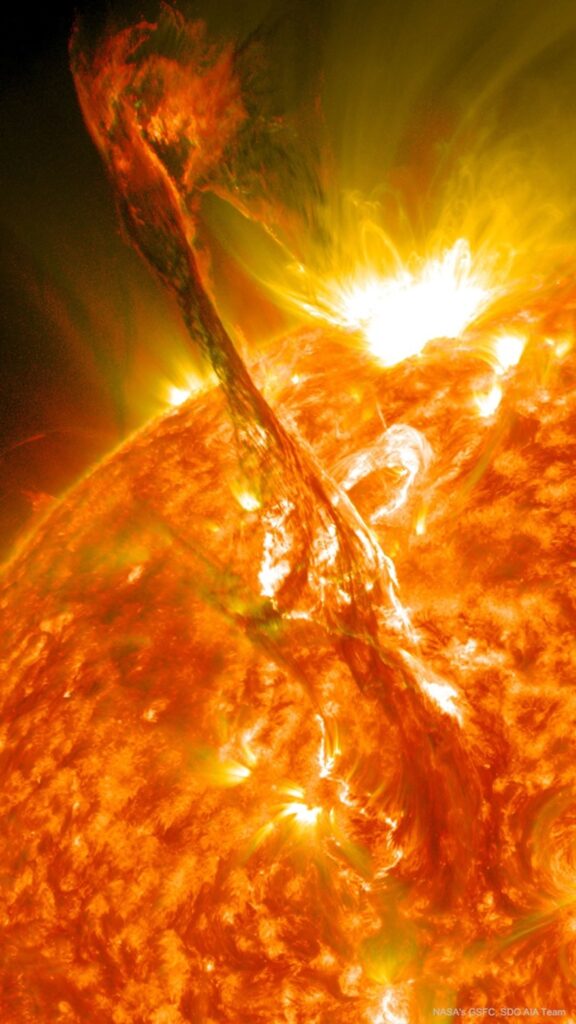
similar to coronal mass ejections
‘This is a unique opportunity to study the launch mechanism of ultrafast outflows,’ says Liyi Gu, lead author of the study. ‘The data suggest that the acceleration of the outflow is driven by magnetic forces, similar to coronal mass ejections from the Sun.’
A coronal mass ejection happens when large blobs of hot solar plasma are hurled into space. A supermassive black hole can do the same, only these eruptions are ten billion times more powerful, dwarfing anything we have ever seen on our Sun. Gu and colleagues propose that the observed black hole event, just like its solar counterpart, is fueled by sudden bursts of magnetic energy. This contrasts with the common theories suggesting that black holes expel matter through intense radiation or extreme heat.
The results offer new insights into how black holes not only pull matter in, but under certain conditions, also shoot it back out into space. This process, known as feedback, may play a key role in how galaxies grow and change over time, influencing the stars and gas around the black hole and helping shape the universe we see today.
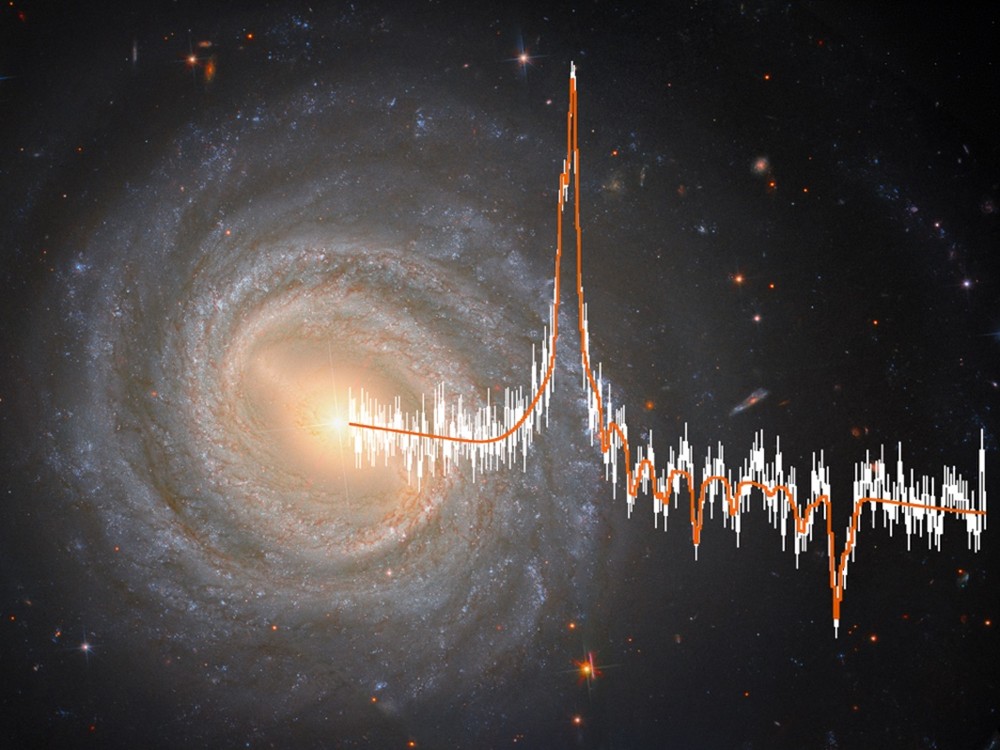
This discovery highlights the importance of international collaboration between space agencies and research institutes. A fleet of seven space missions observed the same target simultaneously: XRISM led the campaign, supported by NuSTAR, Hubble, Chandra, Swift, NICER and ESA‘s XMM-Newton.
Publication
Delving into the depths of NGC 3783 with XRISM, Liyi Gu et al., Astronomy & Astrophysics
DOI: 10.1051/0004-6361/202557189