



Satellite observations show the Fentale volcano in Ethiopia released at least 38 kilotonnes of methane over about three months in early 2025. That makes it the largest measured methane outburst from a volcano. It is comparable to major industrial blowouts and thousands times higher than rates seen at other volcanoes. New findings now explain how these atypical emissions could happen.
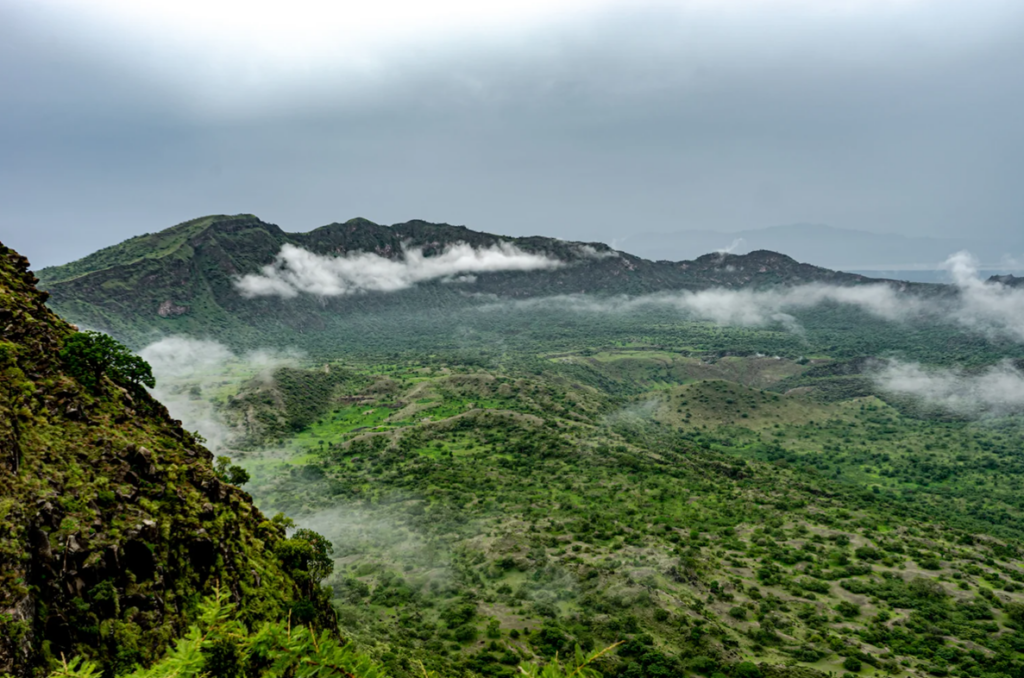
Early last year, SRON detected a strong methane plume downwind of the Fentale crater as part of its operational service to CAMS. SRON scientists swiftly reached out to the satellite company GHGSat, to confirm the crater as the origin of the methane emissions through a tip-and-cue procedure. They also tipped off researchers at University of Bristol, who were already working with colleagues in Ethiopia to monitor the Fentale volcano because of ongoing seismic unrest at that time. However, the underlying cause of the plumes remained a mystery, as volcanoes typically do not emit large amounts of methane.

Now, a team of researchers led by the University of Bristol, including SRON, has published new results suggesting that a mega-dyke intrusion – where a sheet of magma forces its way through fractures in the Earth’s crust – disrupted an impermeable cap beneath which methane was trapped. These reveal a previously unknown way in which methane can be released in sudden bursts. The findings also help scientists understand how magma moving through underground layers of rock may have released greenhouse gases in the distant past. While the event released only a small amount of methane compared with present-day human emissions, the mechanism could explain a period of relatively rapid climate change in the distant past.*
‘This has been an exciting collaboration with scientists from different disciplines,’ says Shubham Sharma (SRON). ‘We used satellite observations to estimate how much methane Fentale released. Combining those thermal, optical, and radar-based observations helped us understand what triggered the release.’
Paper: ‘Methane outburst driven by magma–sediment interactions at Fentale Volcano detected by satellite’ by E. Dualeh et al in Nature Geoscience.
* The event released only a small amount of methane compared with present-day human emissions. It does not have a noticeable effect on today’s climate change, which is much more rapid than changes in the geological past.