



 Back to the story of SRON



Hipparcos: a 3D star map with bonus treasure trove
1989
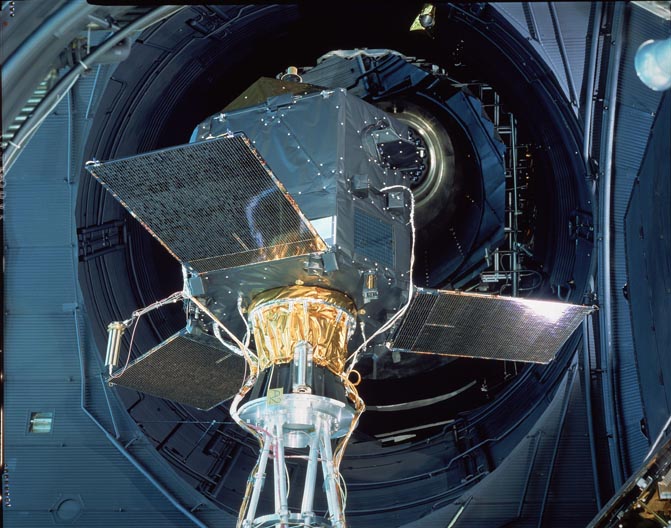
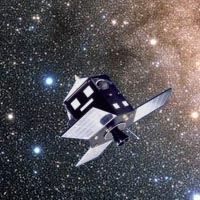
In 1989, the Hipparcos satellite took off to space, enabling the very first reliable 3D map of our cosmic neighbourhood in 1997. The astrometry satellite measured the distances between some 118,000 stars, up to a distance of around 300 light-years. SRON supplied the star detection system, which monitored known stars to keep track of the satellite’s orientation. But that SRON star mapper also yielded an enormous scientific bonus...
The star detector also registered the brightness of any star that came into view. This yielded, as a by-product, the Tycho photometric catalogues of over a million stars and, following a software improvement, as many as 2.5 million stars.
The mission had an enormous impact on astronomy: it enabled the recalculation of the size and age of the universe, confirmed Einstein’s theory of relativity using gravitational lensing, and led to the realisation that the Milky Way is constantly changing shape. The Tycho catalogue provided astronomers with the first photometric catalogue compiled from space, leading to the discovery of thousands of new variable stars. These included new binary stars, as well as stars where more recent observations have revealed that a transiting planet was causing a slight dip in brightness.
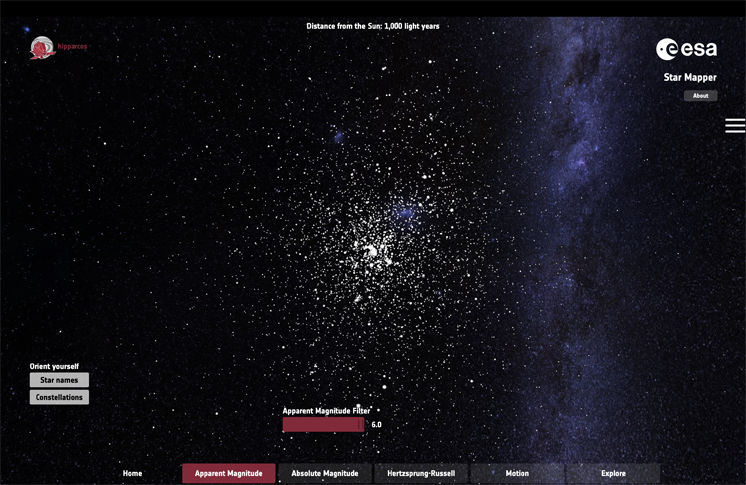
Hipparcos was succeeded by Gaia (2013), which mapped billions of stars in 3D, up to tens of thousands of light-years away. Today, smartphone users and astronomy enthusiasts can navigate through these stars in 3D via apps and the internet.
ESA film from 1989 about Hipparcos.
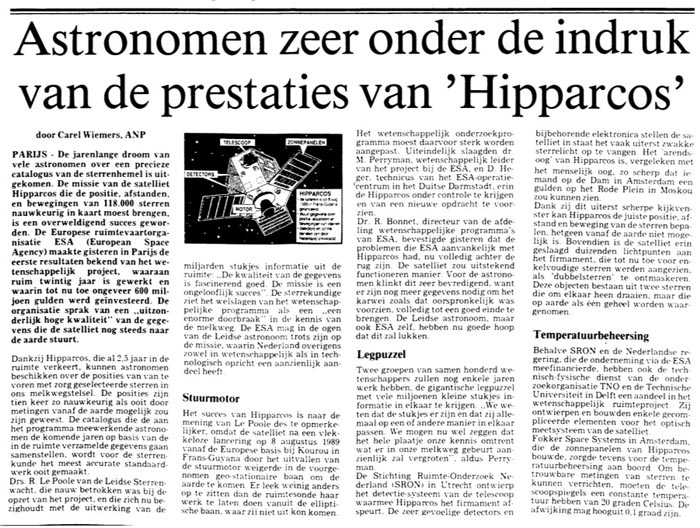
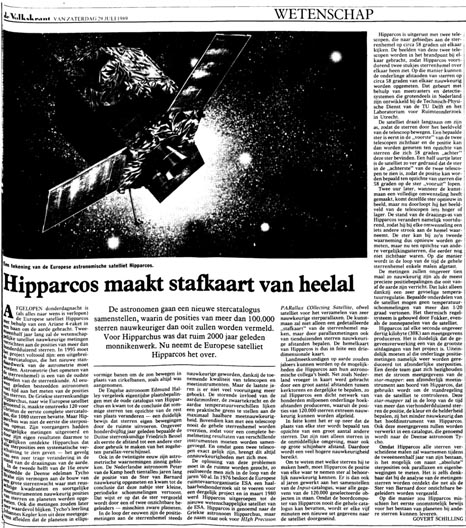
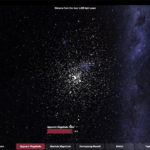
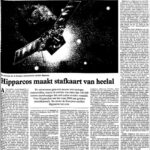
- Photos: Hipparcos during the test phase (ESA); An artist’s impression of Hipparcos (ESA); Some of the newspaper articles about Hipparcos from the Delpher newspaper archive; Explore the Hipparcos catalogue yourself on the ESA website.