



A new analysis of the database from a past X-ray mission has revealed 63 new flaring stars. Some of the discovered X-ray and gamma-ray bursts occurred on sun-like stars in our immediate vicinity. The researchers observed the other portion coming from the distant universe, several billion light-years away. The SRON researchers conclude that the flares in the distant universe are likely all X-ray counterparts of gamma-ray bursts.
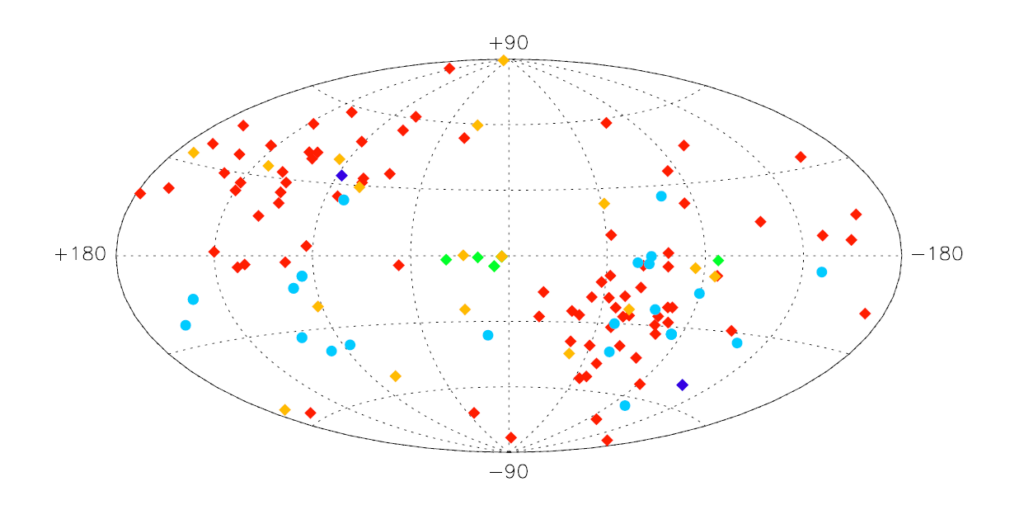
The database studied comes from the Wide Field Cameras, which were built by SRON in the 1990s and launched on the Italian-Dutch BeppoSAX satellite. The two cameras were active in space for six years and paved the way for determining the origin of gamma-ray bursts. Ever since they were first detected in the 1960s, their origin remained a mystery. It eventually turned out that massive stars emit most of these bursts as they collapse into neutron stars or black holes at the end of their lives.
The new study has nearly doubled the number of flaring stars in the BeppoSAX database.
